
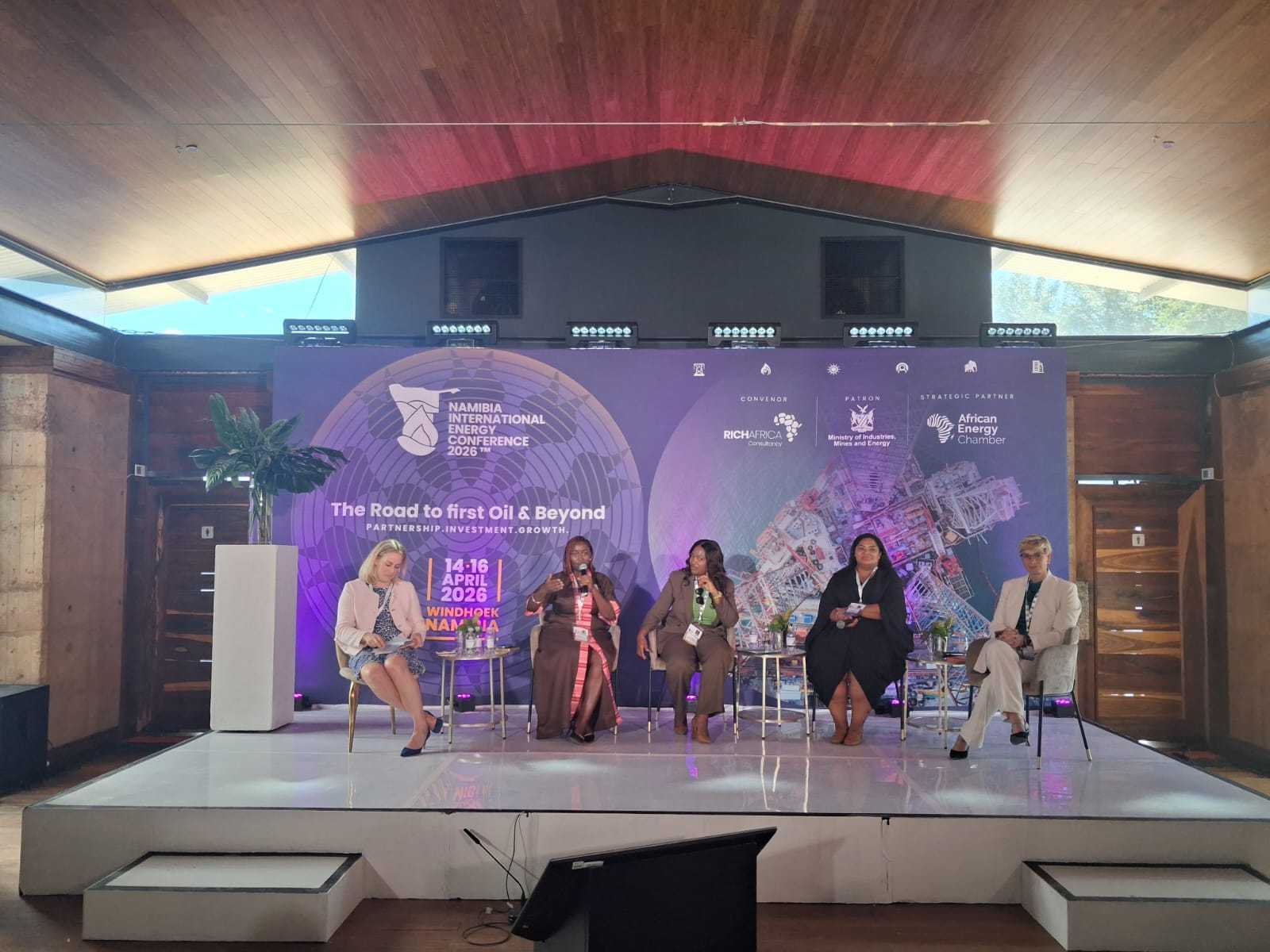
Namibia’s energy sector is entering a structural shift in leadership as it advances toward first oil by the end of the decade, with women increasingly occupying decision-making roles across government, industry and advisory institutions. From upstream regulation to corporate boardrooms, the country is aligning governance, investment and talent development with a broader model shaping offshore oil development in the Orange Basin.
As the voice of the African energy sector, the African Energy Chamber (AEC) supports Namibia’s growing focus on women in energy leadership, emphasizing that inclusive participation strengthens institutional capacity, investment confidence and long-term sector resilience. The Chamber continues to advocate for policies that translate gender diversity into measurable economic impact.
“Through strong local content frameworks and inclusive leadership, Namibia’s oil and gas sector can become a strategic engine of national transformation. Real empowerment. That ensures that women and communities are active participants in building the country’s energy future. Not just observers of it,” says NJ Ayuk, Executive Chairman, AEC.
At the state level, Namibia has consolidated energy oversight under President Netumbo Nandi-Ndaitwah, who also opened the 2026 Namibia International Energy Conference (NIEC) in Windhoek. The AEC is a Strategic Partner of the event. President Nandi-Ndaitwah is driving reforms including the Petroleum (Exploration and Production) Amendment Bill. Within the Upstream Petroleum Unit (UPU), led by Kornelia Shilunga, the focus is on transparent governance and broad-based empowerment, including strict asset declarations for senior officials managing offshore resources.
International operators are also reflecting this shift, with energy major bp having announced a top leadership structure featuring Meg O-Neill as CEO and Carol Howle as Deputy CEO, coinciding with expanded activity in Namibia’s Orange Basin. The company recently acquired three blocks in the basin, marking its entry into the country as operator. Supermajor Chevron has strengthened its local leadership through Ndapewoshali Shapwanale as Deputy Country Manager and Local Content Manager, alongside regional leadership from Beatrice Bienvenu, Chevron’s Country Manager for Namibia, reinforcing local integration and operational capability.
Meanwhile, the Women in Oil, Gas and Energy Network, led by Chairperson Rachel Msiska and Founding Director Nyeuvo Amukushu, is building a structured pipeline of female talent through mentorship and technical training. The group supports Namibia’s National Upstream Local Content Policy, approved in principle in 2026, designed to embed Namibian participation across procurement, engineering and services in offshore development.
At NIEC 2026, operational discipline and readiness were central themes. Petroleum Inspector Louise Hangero of the UPU emphasized that “oil and gas doesn’t stop. It needs to flow through pipelines constantly,” highlighting the need for continuous preparedness in a fast-moving industry where execution speed defines competitiveness across the value chain.
From a corporate perspective, Megan Rodgers, Director and Sector Head for Oil & Gas at Cliffe Dekker Hofmeyr (CDH) stressed that inclusion must translate into decision-making power. She noted that building teams is not just about presence but integration, urging companies to disrupt zero-sum thinking, actively sponsor women and build coalitions that embed diverse perspectives into core commercial decisions.
bp’s Carole Decalf, Exploration Manager for New Ventures, framed diversity as a commercial imperative rather than a social objective. She highlighted that diverse teams improve long-term risk management and stakeholder engagement, stating that “diversity, not charity” drives stronger performance in complex upstream environments requiring collaboration and long-horizon thinking.
In the legal and institutional space, firms such as CDH Namibia are supporting regulatory complexity across Orange Basin developments, with leaders like Frieda Kishi and Megan Rodgers shaping upstream legal architecture. The AEC holds that Namibia’s progress reflects a broader continental shift, where women’s leadership, institutional capacity and local content frameworks are converging to convert hydrocarbons into long-term inclusive industrial value.
