
With multiple final investment decisions (FIDs) expected by end of 2026 and first oil from the Orange Basin targeted for 2029, Namibia’s logistics readiness has become a core investment consideration. The country is embarking on a substantial infrastructure build-out to support high-level production, with a focus on upgraded midstream storage, port expansions, and strengthened regional energy ties.
TotalEnergies is targeting an FID on its Venus field this year, with first oil expected via a floating production storage and offloading (FPSO) vessel and a 40-well subsea system. In December 2025, the company also assumed operatorship of the Mopane discovery under a farm-in agreement with Galp, acquiring a 40% operated interest in PEL 83. TotalEnergies now operates both of Namibia’s largest discoveries, with the Mopane resource estimated at between 800 million and 1.1 billion barrels of oil equivalent.
The Namibia Ports Authority (Namport) completed deepening of the Walvis Bay entrance channel from 14 to 16.5 meters in mid-2025, enabling the port to accommodate vessels that had previously been routed to South Africa’s eastern shore. A drilling fluid supply facility has been established at Walvis Bay, the first of its kind in Namibia, alongside expanded vessel-servicing capacity. In January 2025, Mediterranean Shipping Company (MSC), the world’s largest container shipping line, designated Walvis Bay as its transshipment hub for the Southern Africa West Coast, adding direct services connecting North Europe, Namibia, South Africa and East African ports.
Lüderitz Developing into Primary Offshore Supply Base
The Port of Lüderitz, located closer to the Orange Basin acreage than Walvis Bay, is being positioned as the dedicated logistics base for offshore oil and gas operations. Namport’s N$4 billion expansion plan includes a 300-meter quay wall extension and a dedicated oil and gas supply base, with the first phase of construction targeting commissioning by mid-2027. Three bulk cement plants are already under construction in Lüderitz to support drilling campaigns, while Walvis Bay’s South Port berths are serving as a near-term supply base during the exploration and appraisal phase.
Domestic Offtake and Regional Integration Require Frameworks
Namibia currently relies on imports for nearly all of its refined petroleum products, a structural vulnerability that first oil production could reduce if domestic refining capacity or offtake arrangements are established ahead of time. Namport has reserved land at the North Port of Walvis Bay for energy and industrial clusters designed to serve the wider Southern African Development Community (SADC) region, positioning the port as a potential logistics gateway for landlocked neighboring states like Zambia and Botswana. Developing those offtake and corridor frameworks before production begins is essential to retaining long-term in-country value beyond crude exports alone.
NIEC 2026 Addresses the Road to Production
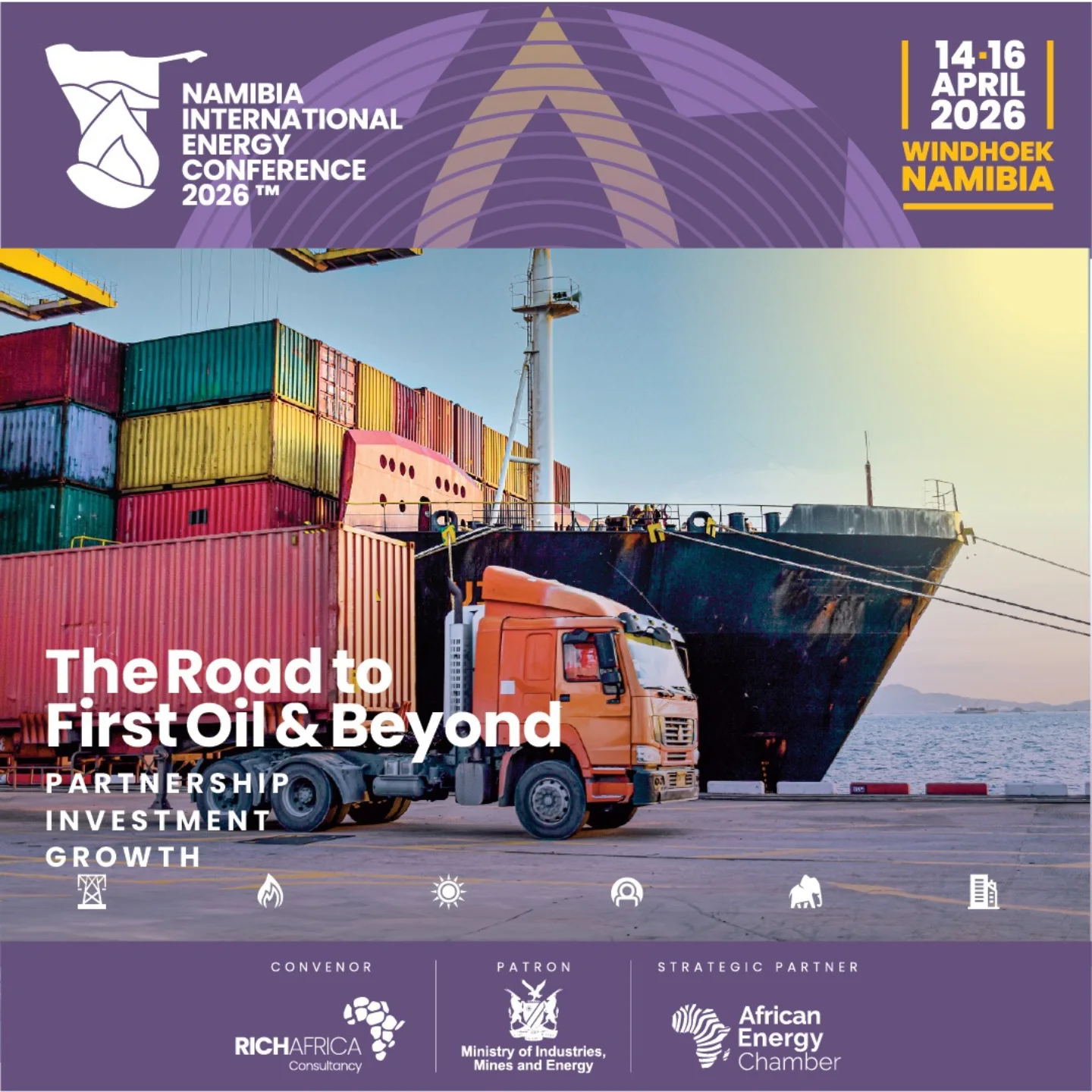
The 8th edition of the Namibia International Energy Conference (NIEC), running April 14-16 in Windhoek under the theme “The Road to First Oil and Beyond,” convenes operators, investors, financiers and government policymakers at a moment when the decisions made on logistics, partnerships and offtake will directly shape Namibia’s production era. Endorsed by the African Energy Chamber and the Government of Namibia, NIEC 2026 is the primary platform for advancing those conversations.
