
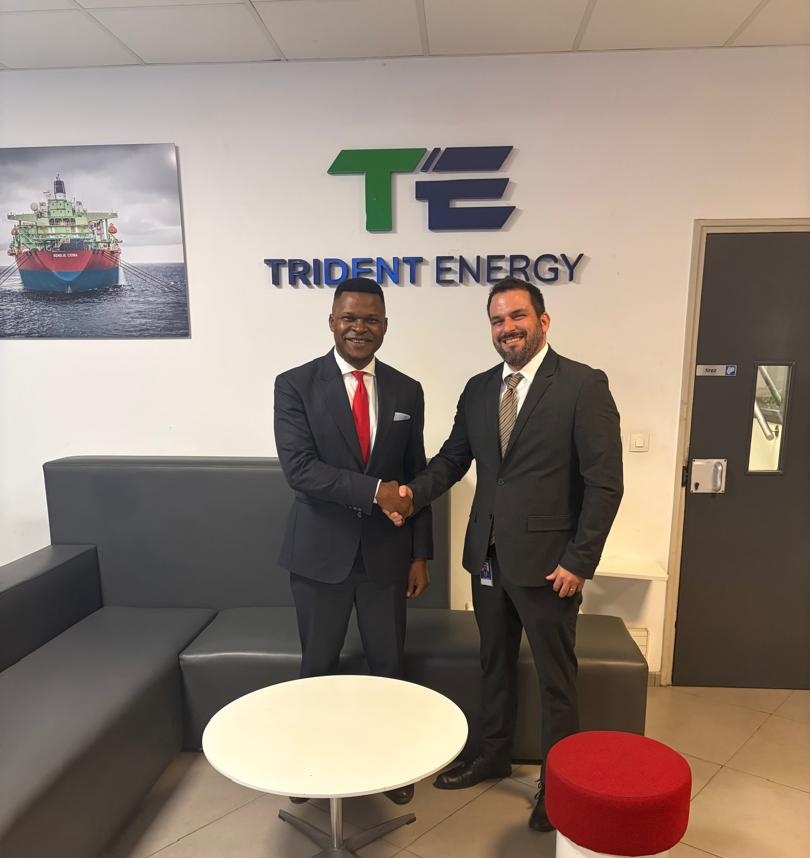
Independent oil and gas company Trident Energy is making a strong play for the Republic of Congo’s mature oilfields following its acquisition of strategic stakes in the Nkossa, Nsoko II, Lianzi and Moho-Bilondo oilfields in 2025. The transaction signaled an expansion of its Central African energy strategy, centered around reversing production decline at ageing assets, enhancing cost efficiency and advancing local content across oilfield operations in key markets such as Equatorial Guinea.
As the company advances toward the next development phase at its Congolese assets, Trident’s experience in Equatorial Guinea offers a blueprint for its Congolese projects. Through targeted infrastructure upgrades, disciplined cost management and a strong local workforce strategy, Trident has shown how mid-cap independents can extract new value from brownfield portfolios that larger majors may consider non-core. Congo now stands to benefit from that same approach as the country seeks to stabilize production and maximize returns from existing offshore infrastructure.
Positioned at the Forefront of Congo’s Mature Acreage
Trident’s entry into Congo’s mature acreage aligns with ambitions to optimize deepwater operations in the region. The transaction included an 85% operated interest in the Nkossa and Nsoko II fields as well as a 21.5% non-operated stake in Moho-Bilondo and a 15.75% interest in Lianzi.
At its operated projects, the company plans to increase production by revitalizing and stimulating current wells while drilling probes. Production initially started in 1996 and 2006 at Nkossa and Nsoko respectively, with the projects now featuring up to 30 producing wells. With the licenses valid until 2040 and 2039, Trident is moving to extend the life of both assets, supporting Congo’s broader production goals.
Equatorial Guinea Demonstrated the Value of Mature Asset Optimization
Trident’s operations in Equatorial Guinea provide one of the clearest examples in Africa of how operational efficiency can reverse decline curves in mature upstream assets. Following the acquisition of stakes in several projects from Hess Corporation in 2017, the company advanced an optimization strategy aimed at identifying opportunities to enhance production through topside improvements, infill drilling and near-field exploration. These efforts have proven successful – particularly at its operated Ceiba and Okume Complex at Block G.
Producing since 2000 and 2006 respectively, the Ceiba and Okume projects feature 12 and 37 producing wells. Since the acquisition, the company has invested $57 million in Okume Central to enhance water injection and power capacity; installed the first-ever Electrical Submersible Pumps in the country to improve well integrity and production rates; upgraded the Ceiba field gas lift system with three permanent structures; and launched a new deepwater drilling campaign to enhance production. As a result, the company has delivered a 37% increase in production.
These initiatives demonstrate the continued viability of Africa’s mature fields, bringing operational learning curves that support Trident’s Congolese portfolio.
Local Content Is Central to the Business Model
What differentiates Trident from many operators in the region is that local content is embedded directly into its operational strategy rather than treated solely as a regulatory obligation. In Equatorial Guinea, the company invested heavily in workforce development, technical training and leadership advancement programs designed to move nationals into senior operational and executive positions. Bienvenido Nguema Envo, Managing Director of the country’s state-owned oil company GEPetrol previously worked at Trident, underscoring the company’s role in developing high-level local expertise across the sector.
Its sustainability strategy encompasses strategic directives, including promoting lateral and geographic job moves to encourage professional growth; established training opportunities across assets; investment into local supply chains; the introduction of a Learning Management System to improve skills transfer; and broader investments in education, health and infrastructure. The company is expected to replicate this approach in Congo as it expands operations.
“Trident Energy has shown that mature African assets can remain globally competitive when operators combine technical discipline with a genuine commitment to local talent development. Congo has not only gained an experienced operator; it has gained a company that understands how to create long-term value through efficiency, workforce development and sustained investment in African expertise,” states NJ Ayuk, Executive Chairman, AEC.
