
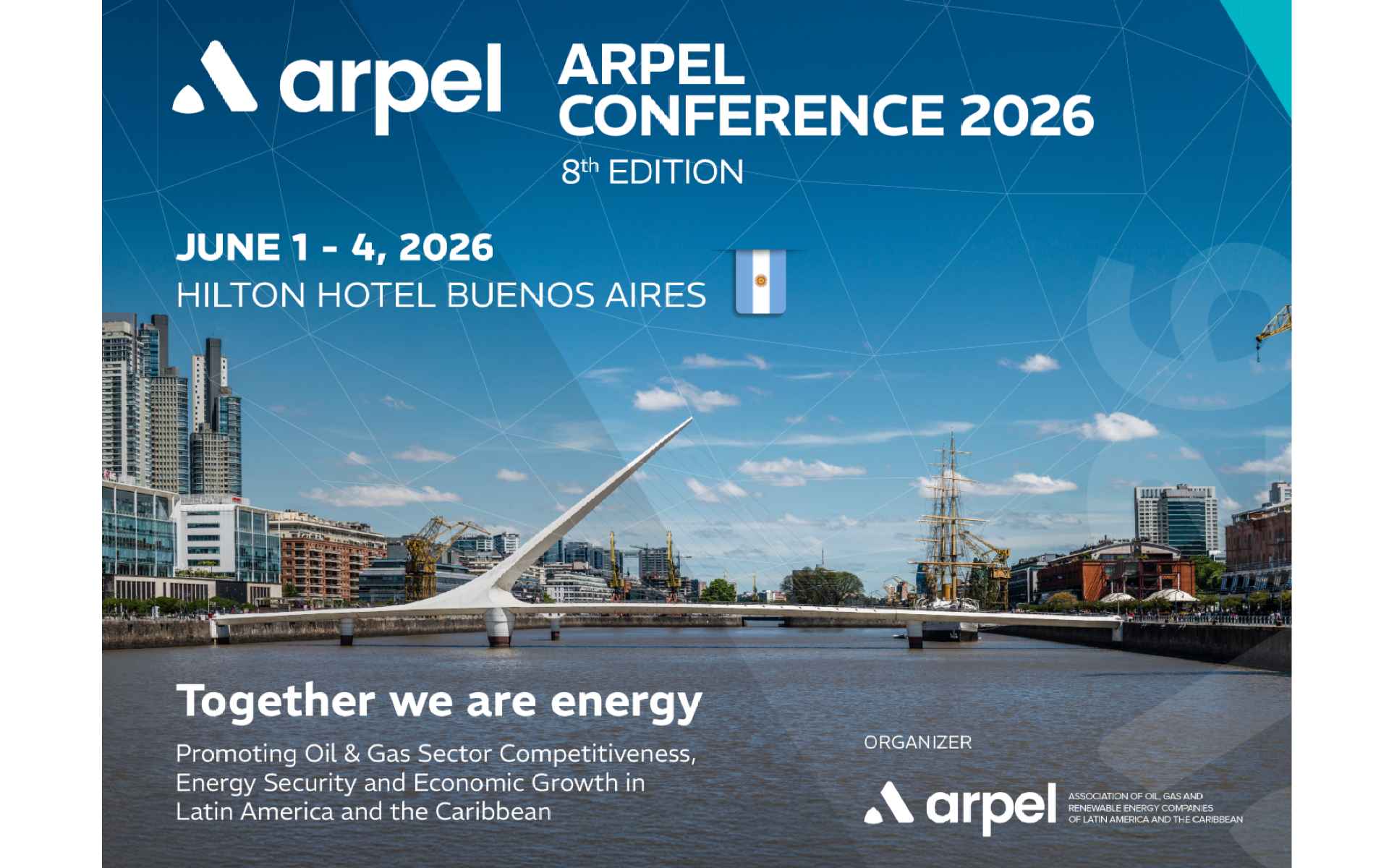
The upcoming ARPEL Conference—organized by the Association of Oil, Gas and Renewable Energy Companies of Latin America and the Caribbean taking place on June 1- 4 in Buenos Aires will serve as a primary catalyst for building a new cross-Atlantic energy corridor. Convening regional stakeholders and energy leaders from South America and the Caribbean, the event offers a strategic platform to advance South American commercial interests in Africa, opening doors for institutional technology transfer, cross-continental investment, and shared operational experiences. Centering this narrative at the summit, the African Energy Chamber (AEC) will lead a delegation to Buenos Aires, with Executive Chairman NJ Ayuk scheduled to brief regional operators on the expanding scope of bilateral market entries.
Ayuk’s participation comes as Africa enters one of its most active upstream investment cycles in over a decade. The continent is expected to see upstream capital expenditure of approximately $41 billion in 2026, while licensing rounds and new market entry opportunities continue to expand across Angola, Nigeria, Tanzania, Algeria, Sierra Leone and Equatorial Guinea. Emerging markets such as Namibia have already witnessed 60% exploration success in recent years, while new discoveries made in Ivory Coast and expanded drilling activities both onshore and offshore unlock pathways for commercial developments. Companies that establish themselves as early-movers stand to capture this value, highlighting a unique opportunity for South American companies, particularly those with proven frontier experience.
Perhaps one of the most strategic partnership avenues is the natural gas sector. For its part, Africa is rapidly positioning itself as one of the world’s next LNG hubs, with companies moving to unlock resources in proven – yet undeveloped – margins. Up to 140 trillion cubic feet (tcf) of discovered yet undeveloped resources lie in the Mozambique’s Rovuma (129 tcf) and Nigeria’s Niger Delta (113 tcf) alone, highlighting the scale of opportunity across the continent. Africa already supplies 8.5% of global LNG, but with global geopolitical events tightening global supply chains, this figure is expected to quadruple by 2050.
Another growth frontier is Africa’s shale gas market. While the continent possesses some of the world’s largest untapped shale resources, many countries continue to face operational and technical barriers to commercialization. Algeria alone holds more than 700 tcf of un-risked shale gas resources, while countries such as South Africa and Tanzania are evaluating tight gas and shale opportunities of their own.
South America’s expertise in gas production positions it as a key partner for Africa. Argentina’s development of the Vaca Muerta shale formation – accounting for 70% of its gas production – has established operational expertise in horizontal drilling, hydraulic fracturing, completion design, supply chain optimization and unconventional regulatory management – capabilities many African markets are actively seeking. The country is currently one of the gas biggest producers in the region, with production corresponding to 4.5 billion cubic feet per day (bcf/d), alongside Brazil which currently produces 5.4 bcf/d – primarily from associated oil projects. Other markets such as Trinidad and Tobago and Venezuela offer proven experience in LNG, cross-border energy infrastructure and export facilities.
“The Atlantic is no longer a barrier; it is a commercial corridor. No nation in the Southern Hemisphere is better positioned to partner with Africa on unconventional energy development than Argentina. By exporting the hard-won expertise of Vaca Muerta, South American firms can capture early-stage value in Africa’s newest frontier basins,” says Ayuk.
These factors underscore South America’s value as a strategic partner for Africa, making a strong case for cross-Atlantic technology transfer, shared value chains and investments. The same technology that has been at the core of South America’s gas market are already operating in Africa. Notably, Golar LNG is advancing a multi-billion-dollar project in the Vaca Muerta shale formation, securing a two-decade-long charter for its FLNG unit last year. In Africa, the company pioneered FLNG solutions in Cameroon while supporting Senegal and Mauritania emergence as LNG producers through its Gimi vessel.
As such, operational knowledge associated with FLNG infrastructure, offshore gas processing and midstream monetization is increasingly becoming a strategic advantage for companies seeking entry into African markets. The upcoming ARPEL Conference marks a strategic turning point for both South American, the Caribbean and Africa, laying the foundation for a South Atlantic energy revival while enabling two of the world’s biggest frontier regions the chance to examine world-class resources, similar development challenges and shared interest in ensuring energy revenues translate into lasting economic growth.
