
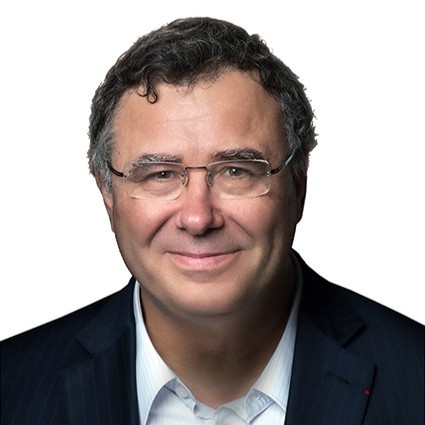
It was frustrating enough to learn earlier this spring that, due to confusion at the Africa Forward summit in Nairobi, TotalEnergies CEO Patrick Pouyanné was blocked from entering. It was even more disheartening to see climate activists and commentators, fueled by anti-French resentment, express amusement when the mishap was reported on social media.
I know that oil and gas leaders are often portrayed as villains regardless of the realities on the ground. I also understand that in Africa, where we still bear the scars of colonization from European powers like France, it can be challenging to see a French business executive as an ally.
But ridiculing Pouyanné is completely out of line. Under his leadership, TotalEnergies has been driving African energy security, industrialization, and improved quality of life across our continent.
Not only that, but in an era when environmentalists, non-governmental organizations (NGOs), and investors disregard African countries’ right to determine their own energy future, Pouyanné has been a clear, reasoned, and effective voice for Africa to continue developing and capitalizing on our oil and gas industry.
Patrick Pouyanné is nothing short of an African champion, and he should be treated as such.
Promising Event, Rough Day
The Africa Forward Summit, co-hosted by the French and Kenyan governments in mid-May, described itself as an opportunity to redefine African-French relations. Organizers invited more than 30 heads of state and 2,000 business leaders. During the conference, French President Emmanuel Macron announced more than 23 billion euros in investments tied to Africa’s energy, artificial intelligence, and agriculture sectors.
The cooperation this event signaled is promising. Unfortunately, the event execution did not go as smoothly as hoped, at least when it came to logistics. There were crowds and confusion outside the event venue. Rwandan President Paul Kagame was reportedly stranded briefly outside the venue, and security blocked Pouyanné from entering altogether, even though he had an invitation.
I am deeply disappointed by the way both men were treated. And I have been dismayed to hear others, Africans in particular, taking satisfaction in Pouyanné’s experience — as if he, as an oil executive and a Westerner, somehow had it coming.
Nothing could be further from the truth. Pouyanné, long before the Africa Forward Summit, has shown what mutual respect between a Western company and African oil- and gas-producing states looks like.
A Continental Commitment
Across Africa, Pouyanné has consistently backed long-term investment, energy development and local participation, even when projects faced political pressure, security threats, or activist opposition.
Active in more than 40 African nations, TotalEnergies accounts for nearly a fifth of the continent’s total hydrocarbon production and extracts around 450,000 barrels of oil equivalent per day across the region. Consider the following examples:
Angola: TotalEnergies has become Angola’s largest oil operator, with major investments spanning Blocks 17, 32, and 14, as well as Angola LNG and the New Gas Consortium. These projects support energy security, infrastructure development, export revenues, and long-term economic growth for the country.
Congo: The company has deepened its commitment to the Republic of Congo through the Moho Nord complex, the country’s largest oil project and a major contributor to national production. The project supports hundreds of Congolese companies, has created thousands of direct and indirect jobs, and has expanded workforce training opportunities for local professionals and businesses.
Libya: I have also seen Pouyanné’s commitment firsthand. Earlier this year in Libya, I was there when TotalEnergies signed an agreement extending the Waha concessions through 2050 alongside Libya’s National Oil Corporation and ConocoPhillips. This agreement is expected to unlock billions of dollars in new investment and support the country’s energy recovery.
Mozambique: After insurgent attacks in Cabo Delgado forced the Mozambique LNG project into force majeure in 2021, many assumed the project would collapse. Instead, TotalEnergies remained committed. In 2025, the company announced the restart of activities tied to the project, which is expected to create thousands of jobs, generate billions of dollars in local contracts and help transform Mozambique’s economy through LNG exports and infrastructure investment.
Beyond energy production, Mozambique LNG has also supported community development initiatives in Cabo Delgado through local employment, business participation, and agricultural programs benefiting farmers, fishermen, and local communities.
Namibia: Through discoveries at the Venus-1X and Mangetti-1X wells in the Orange Basin, TotalEnergies has emerged as a major driver of offshore energy development. The Venus project, considered one of the largest discoveries off Africa’s coast in decades, is advancing toward development following submission of a field development plan to Namibian authorities. Phase 1 alone is expected to recover approximately 750 million barrels of oil with a potential production capacity of roughly 150,000 barrels per day (bpd). The project is also accelerating investment in infrastructure development, local procurement, and broader economic development.
Nigeria: TotalEnergies employs thousands of people in the country and has prioritized projects that create opportunities for Nigerian workers and businesses. At the Ubeta gas field, more than 90% of project labor is expected to be performed locally. Offshore developments tied to Akpo, Egina, Agbami and other major fields continue attracting investment and expanding production.
Tanzania and Uganda: Pouyanné has remained committed to the East African Crude Oil Pipeline (EACOP) despite intense international criticism and activist pressure. Supporters of the project argue that EACOP represents a major opportunity for infrastructure development, government revenues, and long-term economic growth in East Africa.
This is why the ridicule directed at Pouyanné is so misguided. He could have walked away from Africa many times. He did not.
An All-of-the-Above Energy Strategy
Critics often try to portray Pouyanné and TotalEnergies as opponents of the energy transition. That ignores the company’s expanding electricity portfolio across Africa, which includes solar, battery storage, and selected renewable partnerships alongside its oil and gas business.
In South Africa, TotalEnergies is developing a 700 MW solar portfolio and a 216 MW solar project with battery storage. In Libya, it has backed a 500 MW solar project agreement, while in Uganda it has promoted solar deployment tied to local energy access.
In Mozambique, TotalEnergies is part of the consortium developing the Mphanda Nkuwa hydropower project, and in Mauritania it is linked to the Project Nour green hydrogen venture.
TotalEnergies is also investing in Africa’s long-term clean energy future through green hydrogen partnerships in Mauritania and Tunisia, as well as renewable energy initiatives tied to Morocco’s growing role as a regional energy hub.
At the same time, Pouyanné understands that Africa’s energy challenges are not solved only through billion-dollar projects. In Rwanda, TotalEnergies partnered with DelAgua to help distribute improved cookstoves to households across the country, helping families reduce fuel costs, improve air quality, and gain access to cleaner forms of energy.
Vocal Advocate
Like the African Energy Chamber, Pouyanné has consistently called for a balanced approach to energy development in Africa.
Speaking at the 2024 Offshore Northern Seas conference, he criticized an “exclusion policy” toward African gas development and urged policymakers to pursue a more practical approach to the global energy transition. Africa, he argued, should not be denied access to the very energy resources that wealthier nations continue to rely on.
“Frankly, we should revisit this policy of exclusion,” he said. “We will never manage the transition by exclusion. It can only [be achieved] by co-operation and looking to pragmatic solutions.”
African energy stakeholders should absolutely speak for ourselves and defend our own industry. But we should never dismiss the value of allies capable of making meaningful contributions to Africa’s development, especially those who repeatedly demonstrate that Africa is more to them than a petroleum resource.
Patrick Pouyanné’s most eloquent messages have come in the form of his actions. In addition to overseeing TotalEnergies’ many energy investments in Africa, Pouyanné has championed African unity and visibility through TotalEnergies’ major sponsorship of the Africa Cup of Nations, using sport to help bring Africans together across borders and cultures.
And he has worked alongside regional leaders, including Rwandan President Paul Kagame, as efforts intensified to stabilize Cabo Delgado and pave the way for displaced communities and economic activity to return.
Talk to the many Africans who work with Pouyanné. They know they’re not just numbers to him. He’ll call you when you have a family crisis. He’ll push you to excel and advance your career.
And ask those of us at the African Energy Chamber. He has been one of our greatest allies in our work to eradicate energy poverty and improve lives in Africa.
I know it is easy to get emotional about France’s history in Africa, especially its role in colonialism, but we need to think twice before buying into demonization and nativism pushed by fossil fuel opponents. All that does is make capitalizing on Africa’s energy resources more difficult and prolong the energy poverty impacting hundreds of millions on our continent. The past is reference, not residence. We have to be a people who unite and build the future we want for ourselves.
And when allies like Patrick Pouyanné show that they want to walk alongside us as we pursue our goals, they should be welcomed.
