
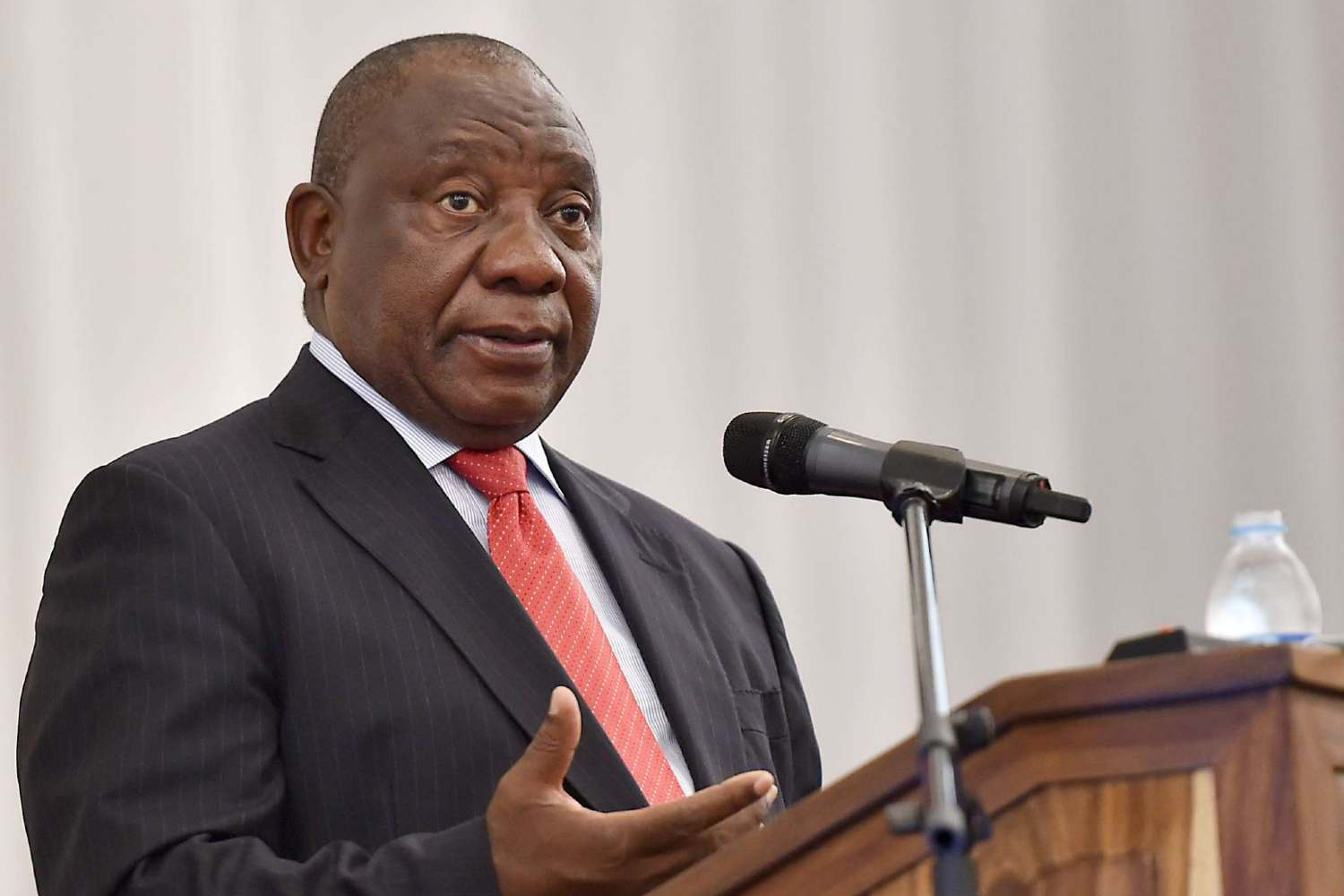
South African President Cyril Ramaphosa has called for greater regional integration while strongly condemning xenophobia and the discrimination of African nationals in South Africa, emphasizing that Southern Africa cannot build a prosperous and integrated future while excluding the very people who make up the region.
Speaking at the 46th SADC Ordinary Summit of Heads of State and Government in Durban, KwaZulu-Natal, Ramaphosa said the region’s ambitions for industrialization, economic development and energy security cannot be achieved by individual countries acting alone.
The African Energy Chamber (AEC) – as the voice of the African energy sector – welcomes the President’s statement and supports his call for deeper cooperation across infrastructure, energy, skills, capital, trade and services. The Chamber maintains that Africa’s energy security will be strengthened through collaboration among nations rather than discrimination, isolation and fragmented development.
Ramaphosa said the SADC Vision 2050, which targets industrial and infrastructure development, market integration and social and human capital development, requires countries to share resources, skills, capital, infrastructure and expertise.
“No single country can, on its own, create all the regional value chains we need,” he said, adding that no country can independently build an integrated power pool, develop cross-border transport corridors, manage shared water resources or effectively respond to regional conflicts and climate change.
Regional Integration Must Include People
Ramaphosa placed the issue of xenophobia at the heart of his broader vision for regional integration, condemning recent discrimination and attacks against African nationals in South Africa.
“We cannot submit to intimidation and harassment of people seen as coming from elsewhere,” he said.
“As South Africans, we are deeply concerned and ashamed that nationals from other countries have in recent months been subjected to discrimination and ill-treatment.”
He warned that xenophobia directly undermines the principles upon which SADC was founded.
“The criminal actions of a few within our communities are a repudiation of the solidarity upon which this Community was founded,” he stated. “We cannot preach integration at summits and practice exclusion in our streets.”
The President stressed that Southern Africa has been shaped by migration for generations and that the movement of people has contributed significantly to the region’s diversity, economic activity and social development.
“Our people are the product of migration,” said Ramaphosa. “Migration accounts for much of the diversity, vibrancy and richness of this region.”
He called for a Southern Africa where people can move according to established laws and protocols and where governments work collectively to address the underlying causes of migration, including conflict, instability, poverty, governance failures and limited economic opportunities.
For the AEC, the message is particularly important for the energy sector, where workers, technical experts, investors, contractors and businesses increasingly operate across national borders.
Regional Energy Integration Strengthens Security
Southern Africa’s electricity sector already demonstrates the benefits of regional cooperation. South Africa imports approximately 7,570 GWh of electricity through the Southern African Power Pool, supporting the stability of its electricity system.
A significant share of these imports comes from Mozambique, which continues to expand its hydropower capacity. Projects such as the Mphanda Nkuwa Hydropower Project could further strengthen regional electricity supply as demand rises across Southern Africa.
South Africa is also targeting renewables to account for 40% of its energy mix by 2030. Greater regional power trading and interconnected generation capacity will therefore remain important for balancing supply, improving reliability and supporting industrial growth.
“The AEC supports President Ramaphosa’s statement and vision for an integrated Southern Africa and the wider African continent to achieve energy security and industrialization goals,” stated NJ Ayuk, Executive Chairman, AEC.
“South Africa’s growing energy demand will require the resources of other African producers while its financial strength will also be crucial to drive developments across other African markets. An integrated Africa stands to benefit all Africans.”
Regional Oil and Gas Resources Can Support Growth
Regional cooperation is equally important across the oil and gas value chain. South Africa relies on countries including Nigeria, Angola and Mozambique for petroleum products and energy feedstock.
As of April 2026, South Africa imported approximately R7.1 billion worth of petroleum products from Nigeria. The country also imports around 160 petajoules of natural gas annually from Mozambique, representing approximately 85%–90% of its industrial gas consumption.
Mozambique’s expanding gas industry, including TotalEnergies’ more than $20 billion Mozambique LNG project and the Rovuma LNG project, could therefore play an increasingly important role in South Africa’s energy security while creating opportunities for regional trade and industrialization.
Emerging oil and gas developments in Namibia and Zimbabwe could provide additional resources for regional markets and South Africa’s refining and industrial sectors.
Ramaphosa also emphasized that African countries should pursue energy strategies suited to their own economic and demographic realities.
“Our task is not to reproduce the industrial models pursued on other continents in other times. Our energy mix is different. Our demographic profile is different,” he stated.
The AEC believes this approach is particularly important as African countries seek to develop their oil and gas resources to address energy poverty and support industrialization, while facing increasing opposition to fossil fuel projects from international climate activist groups.
Recent legal challenges to Shell’s multibillion-dollar exploration campaign offshore South Africa, as well as continued opposition to projects such as the East African Crude Oil Pipeline, highlight the external pressures facing African energy development.
South Africa will therefore increasingly need to work with fellow African producers to secure petroleum supplies, develop regional energy infrastructure and defend the continent’s right to pursue responsible resource development based on its own development priorities.
Infrastructure Must Connect African Markets
Ramaphosa also highlighted how colonial infrastructure systems fragmented African economies and were largely designed to transport raw materials toward international markets rather than connect African producers with one another.
“Our railways were built to run to the sea rather than to each other,” he said.
The AEC supports greater investment in infrastructure that connects African energy markets, facilitates cross-border electricity and gas trade and enables countries to capture more value from their natural resources.
Angola’s expanding refining capacity, including the Lobito and Cabinda refineries, presents an opportunity to strengthen regional petroleum supply while reducing dependence on refined products from outside the continent.
Ramaphosa also called for the removal of non-tariff barriers and harmonization of standards and licensing procedures.
“Suppliers should no longer have to wait months for a licence. Goods should no longer have to be inspected on one side of the border and then again on the other.”
For the AEC, reducing these barriers is essential to accelerating energy investment, cross-border trade and regional value-chain development.
Integration Requires Solidarity
Ramaphosa concluded that regional integration must extend beyond infrastructure, energy and trade to include the people of Southern Africa.
“We need to create equal economic opportunity and build inclusive institutions of governance,” he said. “We seek a region where people move out of choice, not out of desperation.”
He added that “none of what we seek for our region is achievable without peace. Investment does not flow where there is conflict.”
The AEC believes the same principle applies to Africa’s energy future.
“Collaboration is Africa’s strongest energy asset. South Africa has the capital and industrial capacity, Mozambique and Angola have expanding energy resources, Nigeria remains a major hydrocarbons producer, and emerging markets across the region offer new opportunities. Connecting these strengths through regional integration is how Africa can build energy security and industrial growth,” Ayuk concluded.
