
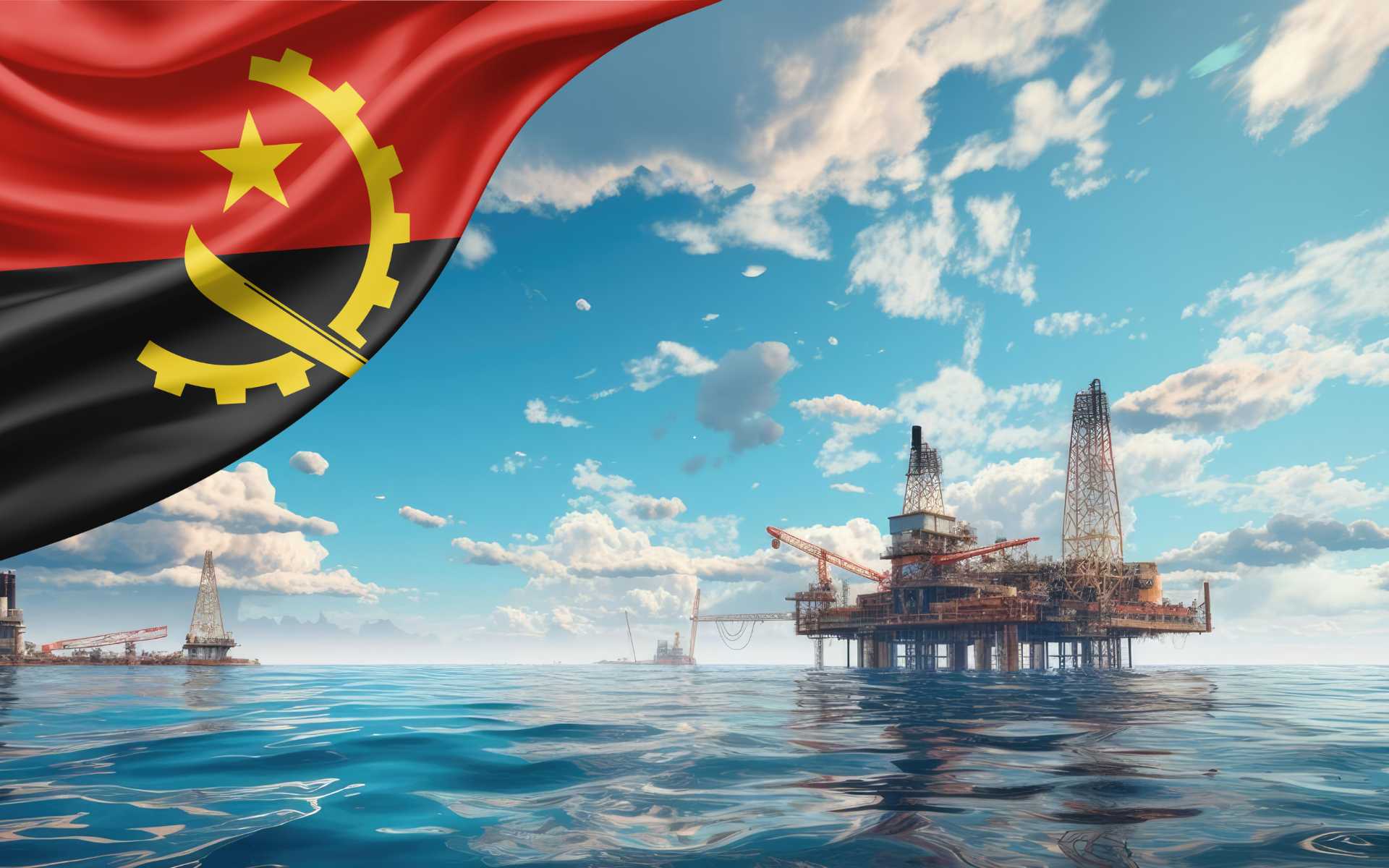
Angola’s offshore petroleum sector is regaining momentum after a period of structural adjustment marked by declining deepwater output and delayed investment cycles. The rebound is being driven by regulatory restructuring under the Ministry of Mineral Resources, Oil and Gas and the National Agency for Petroleum, Gas and Biofuels (ANPG), alongside renewed international operator engagement and a shift toward more competitive fiscal terms designed to unlock frontier deepwater potential.
These dynamics are examined in Crude Oil: Power, Turnaround and Transformation in Angola by NJ Ayuk, Executive Chairman of the African Energy Chamber, which frames Angola’s energy sector as a case study in how geology, policy and capital cycles intersect to shape long-term production outcomes in frontier offshore basins.
Deepwater Geology Defines Angola’s Investment Cycle
Angola’s offshore system is structurally shaped by the breakup of Gondwana and the formation of the South Atlantic rift margin, which created the Lower Congo, Kwanza and Namibe basins. The interaction between Aptian salt deposition and deepwater sedimentation produced one of the world’s most prolific petroleum systems, combining high-quality lacustrine source rocks with stacked turbidite reservoirs.
The result is a dual petroleum architecture split between pre-salt rift plays and post-salt deepwater sandstone systems. The latter – particularly Oligocene and Miocene turbidite channels – became the foundation of Angola’s modern production profile, with salt tectonics creating structural traps that enabled multi-billion-barrel discoveries across offshore blocks.
Golden Blocks and the Deepwater Production Peak
Angola’s transformation into a global offshore producer accelerated in the late 1990s with the commercialization of Blocks 14, 15 and 17. Major discoveries including Girassol, Kizomba and Dalia established the country as a leader in floating production technology and ultra-deepwater development.
By 2008, Angola reached production levels close to 2 million barrels per day (bpd), supported by FPSO-based developments and large-scale subsea infrastructure. This period marked the peak of the deepwater cycle, with output positioning Angola as one of Africa’s most significant crude exporters and a central member of OPEC following its accession in 2007.
Investment Slowdown and Structural Adjustment
Following the 2014 oil price downturn, Angola’s deepwater sector experience a slowdown in new investment due to high breakdown costs, declining reservoir pressure and extended approval timelines. The capital-intensive nature of pre-salt and turbidite developments amplified the impact of delayed project sanctioning, contributing to a gradual decline in output from mature offshore fields.
Institutional bottlenecks within Sonangol, which previously acted as both regulator and commercial operator, further constrained upstream momentum. The resulting investment gap accelerated natural field decline across key producing blocks, highlighting the sensitivity of Angola’s production base to continuous capital reinjection.
Regulatory Reform and the Repricing of Offshore Risk
The restructuring of Angola’s petroleum governance framework under President João Lorenço marked a turning point for upstream investment conditions. The creation of the ANPG as a dedicated concessionaire, alongside reforms to licensing, fiscal terms and operational approvals, redefined the country’s approach to deepwater development.
These changes restored a clearer vision between regulatory oversight and commercial operations, improving transparency in block allocation and project execution. As a result, international operators have begun reassessing Angola’s deepwater potential within a more predictable investment environment.
Renewed Capital Flows and Next-Phase Exploration
Recent licensing rounds and exploration activity indicate a renewed interest in Angola’s offshore frontier, particularly in underexplored deepwater and ultra-deepwater blocks. Operators including TotalEnergies, ExxonMobil and Chevron are advancing appraisal and redevelopment strategies across legacy assets while evaluating new exploration opportunities in structurally complex salt-influenced basins.
“Angola demonstrates how geology alone is not enough – what determines long-term production outcomes is the alignment between subsurface potential and a stable, competitive regulatory framework that allows capital to flow consistently into high-risk offshore environments,” Ayuk says.
The combination of salt tectonics, turbidite reservoir systems and regulatory restructuring has created a framework in which future production growth will depend on sustained upstream investment and efficient project execution across deepwater assets.
