
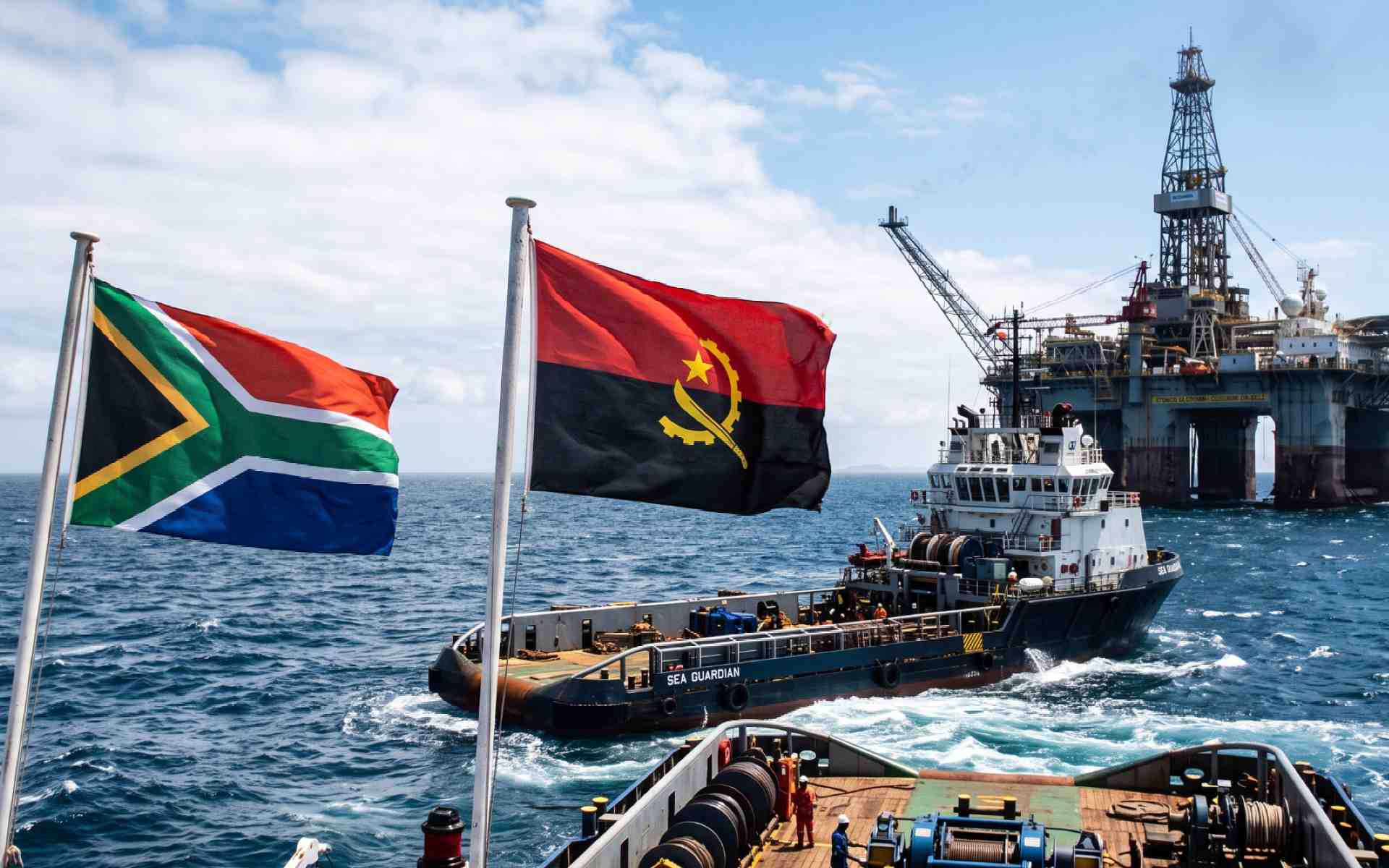
South Africa has entered a critical phase in its upstream development. With new petroleum legislation in place, a national petroleum company established and the Karoo shale gas moratorium lifted, the country has taken important steps toward unlocking its oil and gas potential. The key question now is whether South Africa can translate policy momentum into investment, and Angola’s reform experience provides a practical roadmap for doing so.
In Crude Oil: Power, Turnaround and Transformation in Angola, NJ Ayuk, Executive Chairman of the African Energy Chamber, documents how coordinated legal, fiscal and structural reform reversed years of production decline in the country. The two countries operate in different contexts: Angola reformed a mature producing sector while South Africa is working to establish one. There is, however, a transferable lesson in the sequencing and institutional commitment that made Angola’s reforms effective.
Angola Prioritized Structural Reform
When President João Lourenço took office in 2017, his administration conducted a 30-day sector review that led to sustained regulatory change. The newly-established National Agency for Petroleum, Gas and Biofuels (ANPG) took over upstream regulation, a function previously housed within state oil company Sonangol alongside its commercial portfolio. This coincided with the creation of a dedicated downstream regulator, Instituto Regulador dos Derivados do Petróleos, strengthening governance across the entire hydrocarbon value chain.
On a policy front, the 2018 Natural Gas Law gave Angola its first standalone framework for gas exploration and commercialization across an estimated 11 trillion cubic feet of reserves. The Permanent Offer Regime, introduced in 2021, opened acreage for negotiation on a rolling basis rather than through periodic bid rounds, resulting in 27 block awards. Following that, the Incremental Production Law came into effect in November 2024 and targets recovery of an estimated 500 million barrels from mature assets while extending their productive life by as much as 20 years.
These reforms quickly yielded strong results. Foreign direct investment rose by $2.59 billion in the same year Angola improved from 167th to 146th on Transparency International’s Corruption Perceptions Index. Hydrocarbon production has now been sustained above one million barrels per day, while $70 billion in planned upstream investments signal rising international confidence in Angola’s oil and gas opportunities.
“Angola’s regulatory reforms demonstrate that political will, matched with clear fiscal and legal frameworks, can transform an upstream sector within a single policy cycle. These reforms offer critical lessons for countries such as South Africa, which has the opportunity to be a first-mover in establishing a strong regulatory environment,” states Ayuk.
South Africa’s Regulatory Window is Open
South Africa has begun moving in a similar direction. The Upstream Petroleum Resources Development Act (UPRDA) was enacted in late 2024, consolidating upstream licensing and establishing a 20% mandatory carried interest for the state. The South African National Petroleum Company (SANPC) launched in May 2025, merging PetroSA, iGas and the Strategic Fuel Fund. In October 2025, the government lifted a 13-year moratorium on shale gas exploration in the Karoo Basin – estimated to contain up to 300 trillion cubic feet of shale resources.
The challenge for South Africa is implementation. Environmental litigation has blocked or delayed offshore exploration by TotalEnergies and Shell since 2022. In August 2025, the Western Cape High Court rescinded the environmental authorization for Block 5/6/7 off the southwest coast. The Brulpadda and Luiperd gas-condensate discoveries in the Outeniqua Basin, which an FTI Consulting analysis estimates could contribute up to R25 billion per year to the balance of payments, remain undeveloped.
Angola’s experience suggests that legislative reform alone does not produce investment outcomes. The country’s upstream investment trajectory followed from how quickly and consistently those reforms were applied – from the ANPG’s operational launch through to the rolling award of blocks under the Permanent Offer Regime.
With the UPRDA, the SANPC and the Karoo moratorium lift, South Africa has put its own legislative foundation in place. Whether it can match that pace of execution will determine if the current wave of exploration interest in southern Africa’s offshore basins finally extends south of the Namibian border.
