
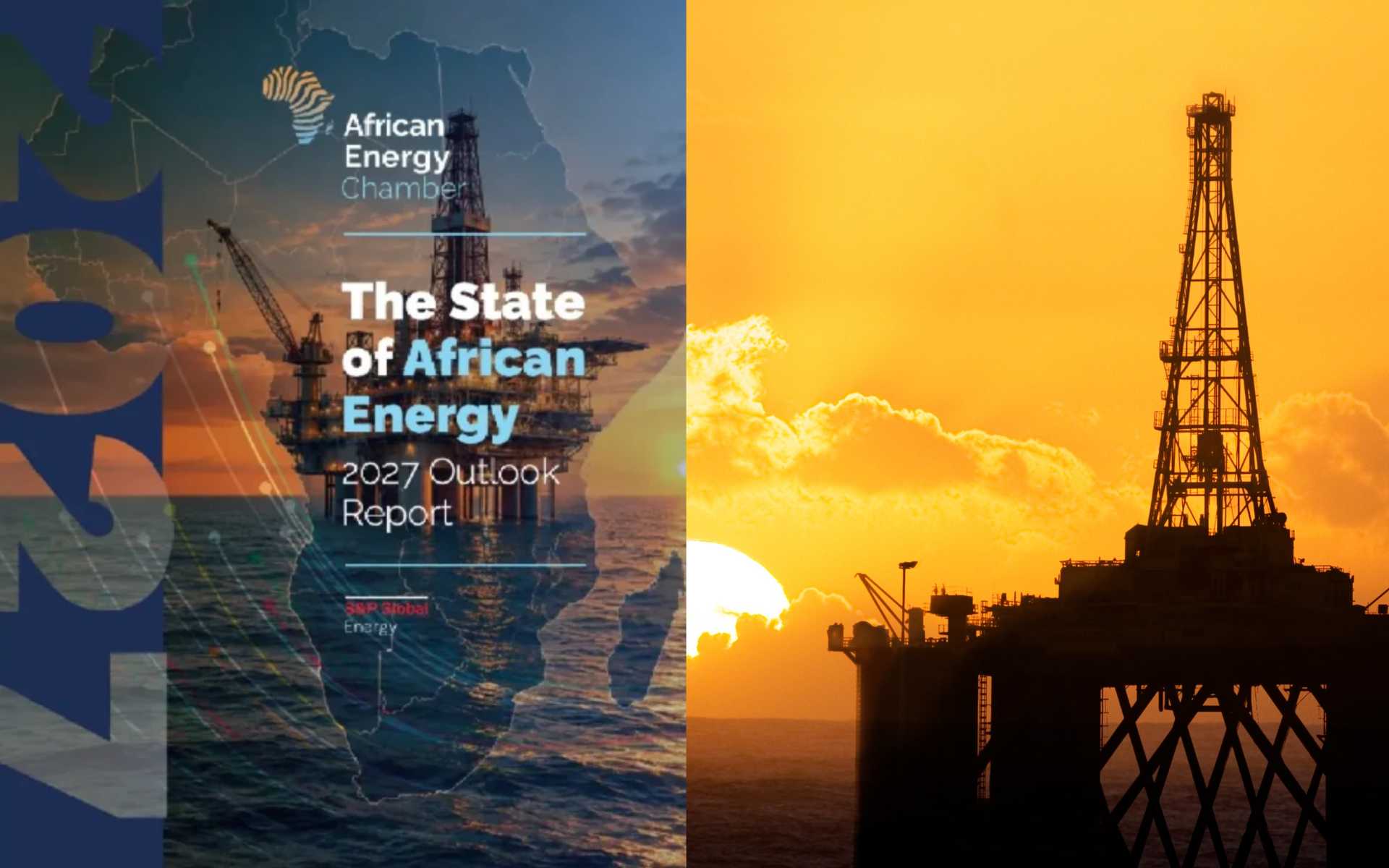
Africa’s perceived above-ground investment risk premium is declining relative to competing regions, according to the African Energy Chamber’s (AEC) State of African Energy 2027 Outlook, developed with S&P Global Energy. More than 30 African jurisdictions now compare favorably with Middle Eastern and global peers, strengthening the continent’s position as IOCs rebuild exploration portfolios.
Pre-contract agreements are replacing lengthy licensing rounds in several frontier markets, reducing signature bonuses, work commitments and administrative requirements. Angola, Gabon, Guinea and Sierra Leone have used preliminary agreements to attract majors, including ExxonMobil, Shell, Eni and bp. Meanwhile, established producers are revising petroleum legislation to improve deepwater, gas and marginal field economics.
Angola and Nigeria Lead Targeted Fiscal Reforms
Angola has introduced successive incentives through Decrees 211/15, 5/18, 2/16, 6/18 and 7/18, improving near-field exploration, marginal-field economics and gas development. The 2018 marginal-field framework reduced taxes and improved cost recovery across deepwater projects, supporting TotalEnergies’ Kaminho and Chissonga developments and Azule Energy’s PAJ project.
Decree 8/24 introduced further tax reductions and improved cost recovery for incremental production from mature fields, benefiting TotalEnergies’ Block 17 and ExxonMobil’s Block 15. Decree 49/19 established the ANPG as an independent regulator, separating regulatory and concessionary responsibilities from state oil company Sonangol. Licensing reforms subsequently awarded 41 of 55 offered blocks.
Nigeria is demonstrating similar progress following its 2021 Petroleum Industry Act and additional executive incentives introduced from 2024. Three major projects have reached FID, including the 110,000-barrel-per-day (bpd) Bonga North development. The government is targeting production of three million bpd and 10 billion cubic feet per day by 2030.
Speaking at African Energy Week (AEW) 2026 in Cape Town, Temitayo Osundosumu, Group Head of Upstream and Midstream Energy at First Bank of Nigeria, credited regulatory clarity and faster contracting with supporting investment. “When you are able to assess risk, you can price it, mitigate it or avoid it,” he said. He also emphasized cooperation between marginal field developers and asset owners to increase production.
Emerging Producers Face a Different Investment Equation
Gabon illustrates the effectiveness of flexible licensing, with bp securing a 10-block technical evaluation agreement in October 2025, ExxonMobil receiving 15 blocks and Shell signing an eight-block agreement in June 2026. Mozambique, meanwhile, passed a revised petroleum law and its first standalone local content law in June 2026, introducing minimum 15% state equity participation.
Namibia is advancing local content requirements while parliamentary delays to its Petroleum Amendment Bill create uncertainty around project approvals. Tanzania LNG and Mozambique’s Rovuma LNG also face regulatory and government decisions ahead of major investment commitments. Across emerging producers, stronger domestic participation and gas supply obligations could increase compliance costs.
Balancing Investor Returns with Domestic Benefits
At AEW 2026, Ricardo Van-Deste, CEO of Sonangol E&P, highlighted the potential of Angola’s underexplored Kwanza Basin. “Onshore or offshore, the Kwanza Basin is probably the next big thing to look for.” He also argued that independent operators can extend mature-field production by extracting remaining recoverable resources.
Perenco’s Cameroon operations demonstrate the value of stable contractual relationships. Denis Chatelan, Head of Business Development, said the company and its partners invested approximately $1 billion over five years, drilled 10 wells and produced 30,000 barrels of oil equivalent per day. He attributed continued investment to reliable state partnerships, adding that infrastructure remains a greater obstacle to reducing flaring than technology.
As Atlantic Margin exploration expands and major developments approach investment decisions, governments face a commercial balancing act. Angola and Nigeria demonstrate how targeted incentives can unlock capital, while emerging producers must ensure stronger domestic participation does not undermine project economics, contractual certainty or development timelines.
Source: The State of African Energy 2027 Outlook, by the African Energy Chamber in collaboration with S&P Global Energy.
Download now: https://energychamber.org/report/the-state-of-the-african-energy-2027-outlook-report/
