
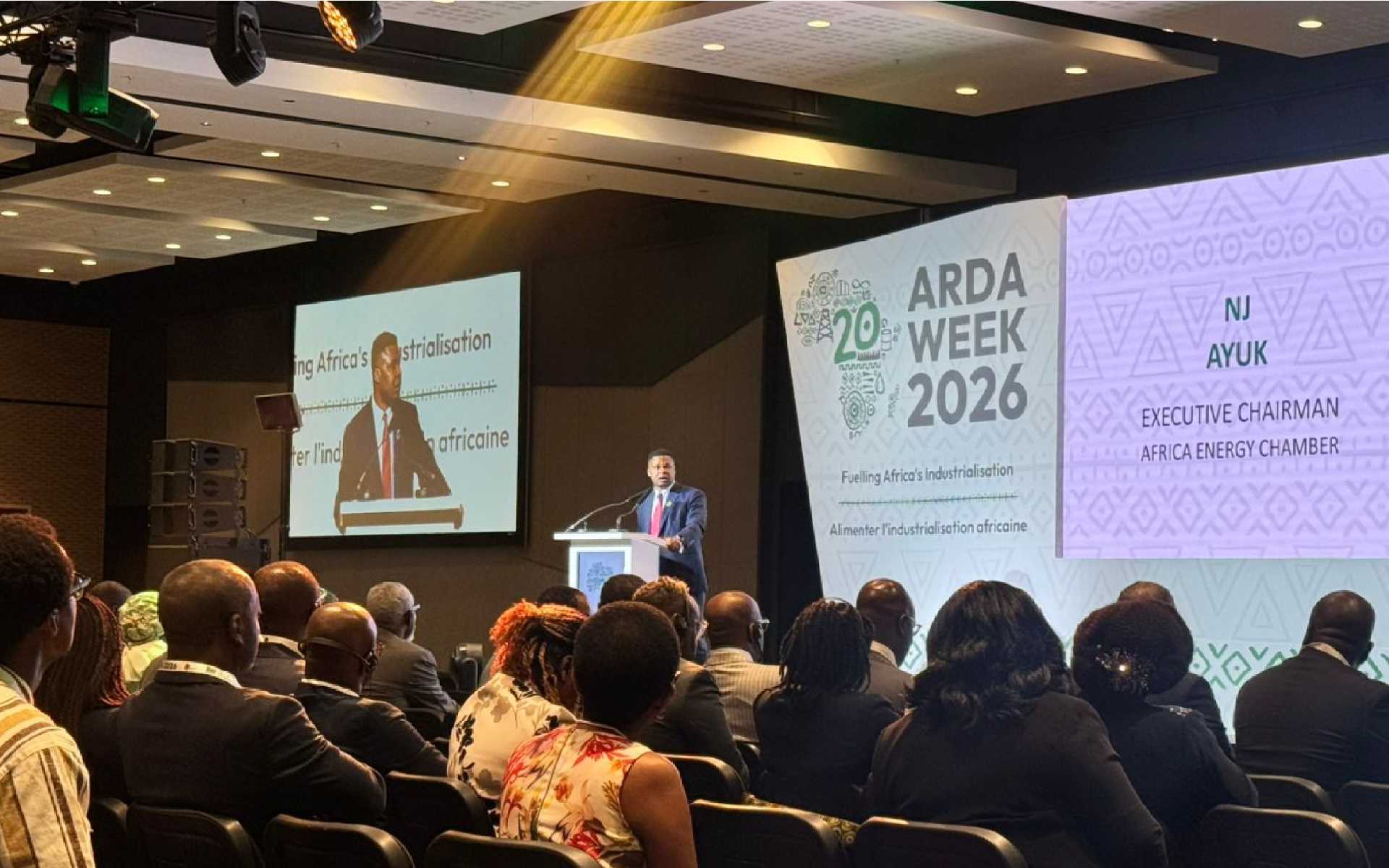
Africa’s downstream sector is back on the radar as global supply disruptions brought about by the Gulf war highlight a need for a strategic re-thinking of African energy systems. With over 600 million people living without access to electricity, 900 million people living without access to clean cooking solutions and African oil demand set to reach 4.5 million barrels per day (bpd) by 2050, industry stakeholders at ARDA Week 2026 issued a call to expand refining capacity, reduce import dependency and unlock greater value from the continent’s hydrocarbon resources.
Delivering a keynote address at the event, NJ Ayuk, Executive Chairman of the African Energy Chamber reinforced the need for downstream expansion as a cornerstone of energy security and industrial development across the continent. He emphasized that the urgency to build robust refining and distribution systems is no longer a policy discussion but an economic and social imperative – and one in which Africa must take ownership.
“A big question for Africa is whether we will embrace innovation, growth and prosperity or slide back to a time where we will deny facts and demand. We need to produce more energy. That is why we keep saying “drill baby drill.” We should never hold back on that,” he said.
Reflecting on the sector’s evolution, Ayuk highlighted a significant shift from foreign-led development to African-driven investment. “Over 25 years ago, it was the majority of foreign companies doing the heavy lifting. Who would have thought it would be facilities such as Dangote transforming the continent and African entrepreneurs such as Sahara Group not only owning refineries but championing energy access.”
This transition signals a broader structural change in Africa’s energy landscape, where indigenous companies are increasingly leading capital deployment, infrastructure development and supply chain integration. Despite this progress, Ayuk stressed that Africa must confront its “realities” head-on. Energy poverty remains widespread, and addressing it requires actionable policies rather than ideological debates. “Energy poverty cannot only be an ideology but action,” he said, urging stakeholders to keep the scale of the challenge firmly in focus.
Central to this transformation is the expansion of refining capacity. Ayuk’s call to “refine, baby refine” underscored the importance of building domestic processing capabilities to reduce reliance on imported fuels, stabilize supply and retain economic value within African markets. Strengthening refining also supports broader industrialization efforts, enabling the development of petrochemicals, manufacturing and logistics sectors.
However, achieving this vision requires enabling policy environments. Ayuk emphasized the need for stable regulatory frameworks, competitive fiscal regimes and market-driven approaches that incentivize investment. “We need to embrace free markets, limited governance and accountability. Companies need to be given the tools they need to be successful,” he stated. This includes reducing excessive taxation, streamlining regulatory processes and ensuring that African entrepreneurs have access to capital.
Cross-border collaboration also emerged as a critical theme. While intra-African trade is often discussed, Ayuk pointed to persistent barriers that continue to limit progress. “Tariffs and customs are so difficult and we need to address that. We need to address barriers and build together,” he said, calling for greater alignment between countries to facilitate regional energy trade and optimize infrastructure utilization.
In addition, Ayuk highlighted the importance of financial independence within the sector. To meet anticipated demand growth, Africa requires more than $100 billion in refining investment. This highlights a unique opportunity for both foreign and African financial institutions looking at mobilizing capital for impactful projects across the continent.
Ultimately, Ayuk’s remarks reinforced a broader industry consensus: Africa must unapologetically pursue energy development across the value chain. “We will never back down on producing oil. We will refine, drill and ensure that our young people across the continent have access to energy. We will never apologize for producing the energy we need,” he said.
