
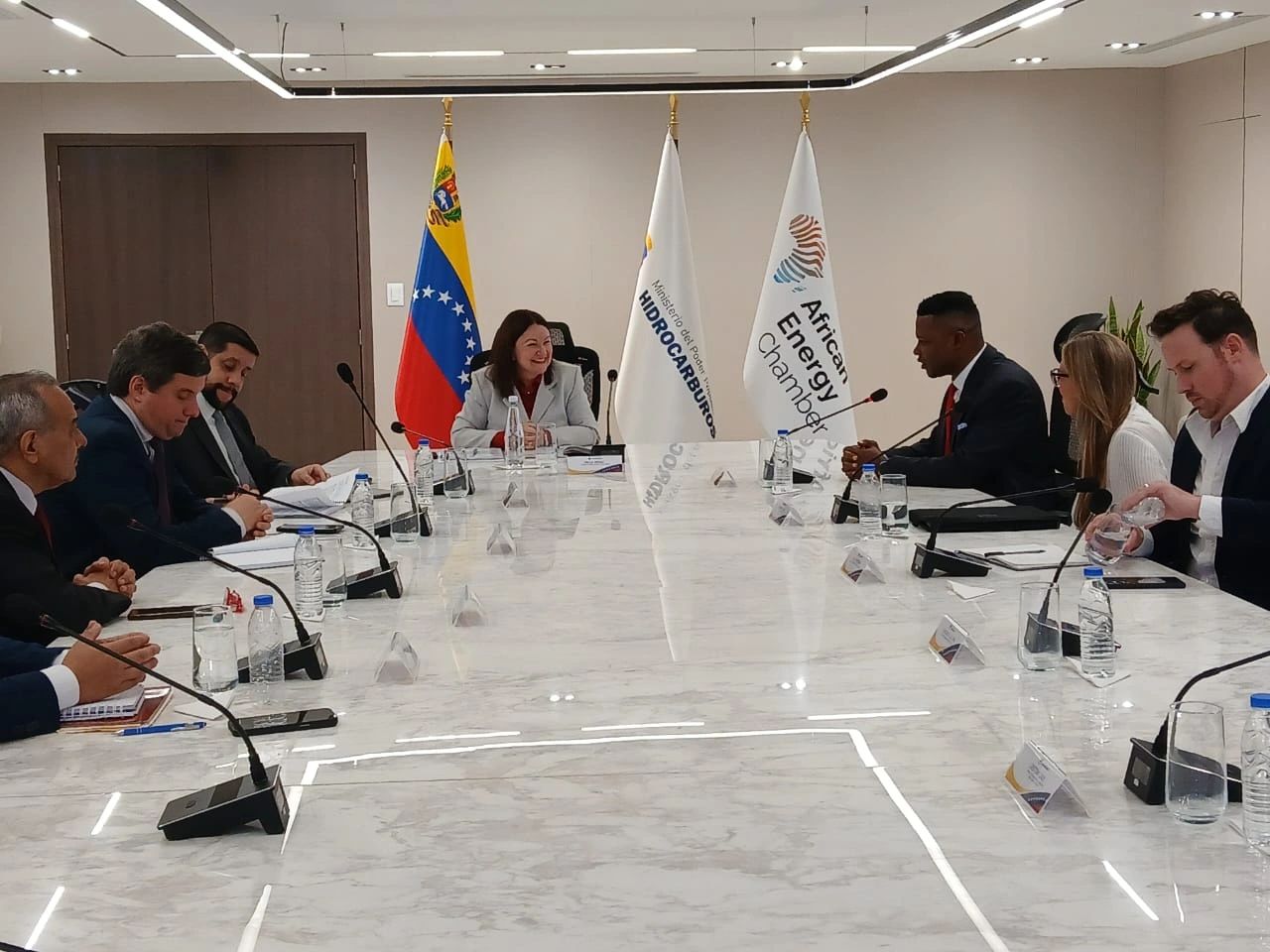
The African Energy Chamber (AEC) and Venezuela have intensified coordination through high-level engagements in Brazzaville and Caracas, building on a structured cooperation roadmap linking the African Petroleum Producers’ Organization (APPO), Petróleos de Venezuela (PDVSA) and Venezuelan diplomatic channels. The most recent meetings confirmed Venezuela’s formal status as a strategic non-African observer within APPO, expanding technical exchanges and policy alignment with African national oil companies (NOCs).
These developments underline a wider AEC strategy to integrate African energy institutions into global upstream markets while supporting long-term energy access goals. Through coordinated investment frameworks, knowledge transfer and join project pipelines, the Chamber is positioning African operators and financiers to participate in Venezuela’s oil and gas rehabilitation while reinforcing South-South energy cooperation and industrial capacity expansion.
Earlier this month in Brazzaville, the AEC engaged APPO and Venezuelan Ambassador Laura Suarez to deepen regulatory coordination and accelerate the African Energy Bank framework. Discussions centered on technical cooperation, upstream financing mechanisms and Venezuela’s observer role in APPO, reinforcing structured collaboration between African producers and Venezuela’s petroleum institutions for long-term project execution.
In March 2026, Venezuela sent a delegation to Cape Town for reciprocal engagement with the AEC following the Caracas mission. Led by Deputy Minister of Hydrocarbons Aruro Gil and Ambassador Carlos Feo Acevedo, the meetings focused on execution timelines for executive training, investment matchmaking and technical education programs tied to the agreements arranged in Caracas in February and emerging production participation contracts.
The AEC conducted its main working mission in Caracas in February this year, signing a landmark MoU with PDVSA and Venezuela’s energy ministries. AEC Executive Chairman NJ Ayuk met Acting President Delcy Rodriguez to align on upstream recovery, modular gas development and regulatory reform, establishing a structured cooperation framework covering investment promotion, technology transfer and workforce development.
Venezuela’s upstream system remains anchored by the Orinoco Belt, which holds roughly 303 billion barrels of extra-heavy crude and around 195 trillion cubic feet of gas. These resources sit across mature infrastructure-constrained basins requiring intensive upgrades, blending and diluent systems, making them structurally suited to long-term partnerships rather than short-cycle production models.
For African stakeholders, the commercial logic sits in shared capability gaps. African NOCs, service companies and financiers bring expertise in marginal field redevelopment, offshore engineering and modular LNG systems, aligning with Venezuela’s need for rapid well workovers, refinery rehabilitation and gas monetization. This creates a framework where technical execution, not just capital, becomes the binding constraint.
The AEC’s cooperation model emphasizes structured investment entry points through production participation contracts, joint ventures and export-linked financing structures. These mechanisms are designed to improve bankability by giving operators clearer export rights, pricing frameworks and operational autonomy, while maintaining state ownership of reserves. For African investors, regulatory predictability and contract durability are central to long-term participation.
At the institutional level, the partnership is increasingly framed around continuity, coordination and trust. African and Venezuelan stakeholders are prioritizing stable engagement channels, technical exchanges and joint planning rather than transactional deals. This includes coordinated training pipelines, shared data rooms and aligned upstream development strategies, reinforcing a broader South-South approach to energy security, capital mobilization and industrial resilience.
“The future of African energy lies in partnerships that respect sovereignty while unlocking shared value across borders. Venezuela represents a historic opportunity to align African capital, expertise and ambition with one of the world’s largest hydrocarbon endowments. Together, we are building a model where energy development directly translates into energy access, industrial growth and long-term prosperity,” says Ayuk.
The AEC-Venezuela partnerships signals a longer-term shift toward South-South energy integration, where coordinated investment, technical exchange and stable policy frameworks unlock production growth, capital flows and shared industrial development.
