
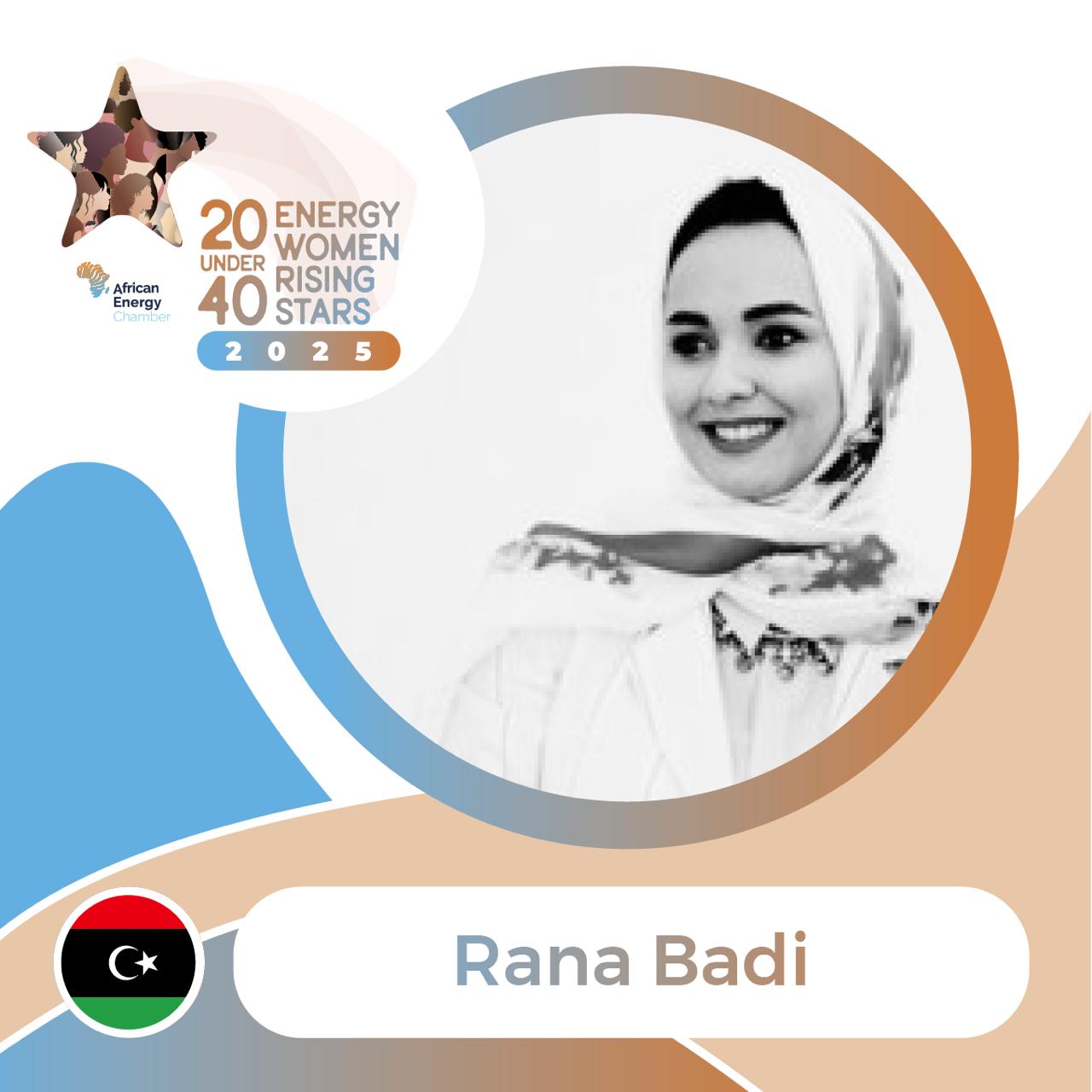
With over a decade experience in CSR, communications and digital transformation, Rana Badi, CSR Project Lead at TotalEnergies in Libya, leverages her dual master’s degrees to drive impactful social investment and sustainability programs. Badi is recognized as a 20 Under 40 Energy Women Rising Star for her commitment to sustainable energy development in Africa.
Please provide a brief overview of your journey in the energy industry that led to your current role? What are some key achievements or milestones that you are particularly proud of?
I began my career as an Operations Assistant before moving into a role overseeing Internal Communications. This opened the door for me to expand into HR administration and training support, which gave me valuable insight into people development and organizational culture. I later transitioned into leading CSR projects and managing external communications, where I found my passion for creating meaningful impact beyond the company. One of my proudest achievements has been delivering impactful social performance initiatives for local communities. For example, I successfully led the development of seven football pitches in the Essider region, providing accessible recreational spaces for all nearby towns. This project not only fostered community engagement but also supported multiple UN Sustainable Development Goals.
The energy industry is known for its complexities. What were some significant challenges you faced along the way, and how did you navigate through them to achieve your goals?
One of the main challenges I faced early in my career was entering an industry that is predominantly driven by engineers and technical experts. As a non-technical professional, it was initially daunting to find my place and demonstrate the value I could bring. However, I was fortunate to be part of an organization like TotalEnergies that truly values diverse talents. Through tailored training programs, continuous learning opportunities, and strong mentorship, I was able to build the knowledge and confidence needed to contribute meaningfully. This experience taught me that with the right mindset and support, non-technical skills can complement technical expertise and add real value to the industry.
What advice would you give to young women aspiring to excel in the energy sector? Are there any specific strategies or mindsets that helped you overcome obstacles and reach your current position?
My advice to young women aspiring to build a career in the energy sector is to lead with purpose and always stay curious. This is an industry that is constantly evolving, so keeping yourself informed and committed to continuous learning is essential. It’s also important to build resilience—view challenges not as obstacles but as opportunities to innovate, grow, and prove your capabilities. At the same time, never underestimate the power of collaboration: seek out diverse perspectives, build meaningful networks across disciplines and cultures, and support one another. With the right mindset and determination, women can not only succeed but also play a vital role in shaping the future of the energy industry.
A career in energy can be demanding. Could you describe a typical day in your life?
As a mother of two working in the corporate world, my days can certainly be demanding. Striking the right balance between career and family is not always easy, but I believe it is essential for long-term success. I make it a priority to stay organized, clearly setting both personal and professional priorities. This allows me to manage my responsibilities effectively while still being fully present for my family. For me, maintaining this balance isn’t just about time management – it’s about ensuring that both work and life complement each other in a sustainable way.
Looking ahead, what changes or advancements do you hope to see in the energy sector? How do you envision your role in shaping that future?
Looking ahead, I hope to see greater representation of women in leadership positions across the energy sector. Having more women in managerial roles will not only bring diverse perspectives but also inspire future generations to envision themselves as part of this industry. In my current role leading CSR projects when related to Education, I see myself as a bridge between today’s expertise and tomorrow’s talent. One example is our annual program, TotalEnergies University, where we provide young graduates with 40 hours of training delivered by retired employees. This initiative allows experienced professionals to pass on their knowledge and insights, while giving the younger generation the tools and confidence to pursue a career in energy. For me, this is how I can contribute to shaping a more inclusive, knowledgeable, and forward-looking energy sector.
