
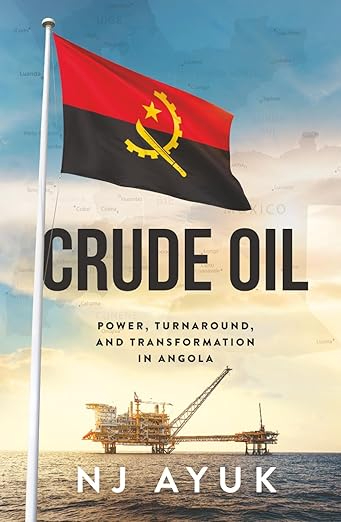
African Energy Chamber Executive Chairman NJ Ayuk’s latest book Crude Oil: Power, Turnaround and Transformation in Angola has officially hit the shelves, bringing readers an in-depth examination of one of Africa’s biggest commodity markets. Offering both a detailed and entertaining analysis of Angola’s oil industry, the book traces how decades of political evolution, structural reform and strategic leadership has reshaped the country’s crude market.
Blending political history, industry analysis and firsthand insights from key decision-makers, the book examines how Angola transformed itself into a globally competitive crude oil market despite years of production decline, economic pressure and structural challenges. The book features perspectives from Angola’s Minister of Mineral Resources, Oil & Gas Diamantino Azevedo; Sonangol CEO Sebastião Gaspar Martins; and National Oil, Gas & Biofuels Agency (ANPG) President Paulino Jerónimo, offering readers a behind-the-scenes view into the reforms and policy decisions shaping the country’s next oil chapter.
The release marks Ayuk’s latest addition to a growing portfolio of bestselling energy and investment books focused on Africa’s development trajectory. Previous titles include Big Barrels: African Oil and Gas and the Quest for Prosperity; Billions at Play: The Future of African Energy and Doing Deals; and A Just Transition: Making Energy Poverty History with an Energy Mix. Through these works, Ayuk has consistently advocated for pragmatic, investment-driven energy development strategies tailored to Africa’s economic realities.
The latest release focuses on the effectiveness of Angola’s sweeping reform agenda in recent years and how policy changes have driven exploration and investment. These include the establishment of the ANPG and launch of a multi-year licensing strategy in 2019, aimed at strengthening investor confidence, streamlining industry procedures and boosting licensing activity. Between 2019 and 2025, 64 blocks were negotiated of which 37 were awarded and 27 remain under approval or negotiation. The next licensing round is expected this year.
The book also explores how Angola’s flexible investment structures have unlocked significant investment by both international oil companies and independents alike. The introduction of a Permanent Offer Regime has allowed operators to seize acreage outside of the confines of traditional licensing structures, while the launch of the Incremental Production Decree has boosted reinvestment in mature fields. These reforms – combined with improved fiscals and strengthened cooperation with Sonangol – have already delivered results.
TotalEnergies has committed $3 billion to the market in the coming years, Azule Energy is investing $5 billion while ExxonMobil, Chevron and Equinor are expanding their portfolios. Onshore, independents are leading an exploration resurgence, with companies to the likes of Afentra, Etu Energias, Corcel, ACREP and more driving drilling activities. These reforms have also attracted new players to either enter or return to the market. Shell and Petrobras made their return to Angola’s deepwater basins in 2025 while Oando formalized its entry into the country’s onshore market in 2026.
Beyond investment commitments, the book offers a snapshot into the projects driving Angola’s production resurgence. These include advancements at the Agogo Integrated West Hub Development following the commissioning of the Agogo FPSO in 2025 and start of the Ndungu field in 2026; the Kaminho deepwater development – on track for a 2028 start; and the operational Begonia and CLOV Phase 3 projects, which collectively added 60,000 bpd to Angola’s production portfolio in 2025. As the country continues to pursue production stability above one million bpd, the book positions Angola not only as a major hydrocarbon producer, but as a case study in how reform-oriented policy can reposition African oil markets for long-term competitiveness and growth.
“Angola’s story is not simply about oil production. It is about reform, resilience and the willingness to confront difficult realities to build a stronger future. This book examines how leadership, policy reform and strategic investment transformed Angola’s oil sector into one of Africa’s most compelling turnaround stories,” states Ayuk.
Purchase your copy of the book here:
https://www.amazon.com/dp/1641463538?=undefined&linkCode=sl2&tag=madforsuc-20&linkId=9176fafb4ec6392f1dbd83ae2651fe30&language=en_US&ref_=as_li_ss_tl
