

Four Ugandan farmers have launched a legal challenge in the UK High Court against the East African Crude Oil Pipeline (EACOP), seeking to apply Ugandan constitutional, environmental and climate law to EACOP Ltd., the project’s UK-registered operating company. Filed mere months before the pipeline is expected to begin transporting Uganda’s first crude exports, the case argues that the 1,445-km pipeline breaches Uganda’s legal protections and asks the English court to prevent the project from becoming operational.
This is clearly nothing but the latest example of foreign-backed litigation targeting strategically important African energy projects through overseas courts. And it comes at a time when Uganda and Tanzania stand on the threshold of transformational economic opportunity.
The African Energy Chamber (AEC) maintains that decisions about Uganda’s energy future should be made in Uganda – not in London.
And the timing is no coincidence.
After years of permitting, financing and construction, EACOP is approaching one of its most important milestones. Yet just as Uganda prepares to become an oil-producing nation, another legal challenge has emerged – this time asking a British court to determine whether one of Africa’s most important infrastructure projects should proceed.
“This is colonialism 2.0,” says NJ Ayuk, Executive Chairman of the AEC. “For generations, Africa was told what resources it could exploit and how it should develop. Today, some of those same pressures are being repackaged through foreign-funded litigation and ideological campaigns that seek to dictate Africa’s energy choices from thousands of kilometres away. UK courts should not determine Uganda’s energy future. Ugandans should.”
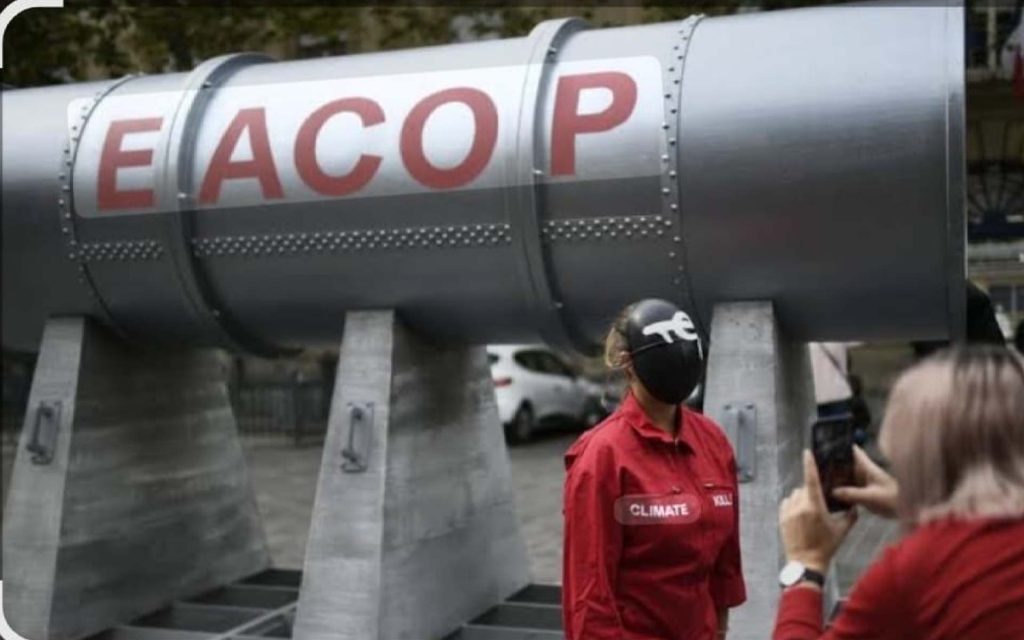
The Chamber has long warned that legal campaigns against projects such as EACOP are becoming an increasingly common tool for delaying African energy development. Whether through repeated court challenges in East Africa, litigation targeting Mozambique LNG or legal battles that have stalled exploration in South Africa, the pattern is becoming difficult to ignore.
Each lawsuit may differ in its legal basis, but the cumulative effect is the same: greater uncertainty for investors, delayed infrastructure and slower economic growth for countries seeking to monetize their natural resources.
EACOP is the infrastructure that unlocks Uganda’s estimated 6.5 billion barrels of oil resources, connects the country’s production to international markets and creates opportunities for thousands of workers, local businesses and suppliers across Uganda and Tanzania. Developed by some of the world’s largest companies – TotalEnergies and CNOOC – alongside the Uganda National Oil Company and Tanzania Petroleum Development Corporation, the project will strengthen local content, generate government revenues, expand infrastructure and support broader industrial development across East Africa.
Activists argue the project has affected more than 100,000 people through land acquisition while raising concerns about freshwater systems and protected habitats. TotalEnergies has consistently maintained that the project has implemented extensive environmental and social safeguards, biodiversity protection measures and international standards designed to minimize impacts while delivering long-term benefits to host communities.
Delaying those benefits carries consequences.
Every year that strategic energy projects are tied up in prolonged litigation is another year that jobs are postponed, investment decisions become more difficult and governments face greater obstacles in addressing energy poverty. For many African countries, responsible oil and gas development remains one of the few realistic pathways to financing schools, hospitals, roads, electricity networks and future renewable energy investments.
The Chamber also argues that the lawsuit raises a broader question of sovereignty. African institutions have already examined legal challenges related to EACOP, and Uganda possesses its own constitutional and judicial mechanisms for resolving disputes. Asking a UK court to intervene risks setting a precedent that extends well beyond one project. It effectively invites foreign jurisdictions to influence domestic development priorities across the continent.
The debate over EACOP has never been about a pipeline alone. It is whether Africans retain the sovereign right to develop their own resources, under their own laws and for the benefit of their own people, or whether those decisions will increasingly be contested in foreign capitals by interests far removed from the communities they claim to represent.
“The time for Uganda to exploit its immensely valuable resources is now. Africa will not give in to international coercion to prevent the continent from energizing and bringing wealth to its people. Africa will not succumb to pressure to adhere to the energy transition on anyone else’s terms. We know what is good for African energy and we will do everything in our power to ensure that the continent’s resources benefit her people,” Ayuk concluded.
