
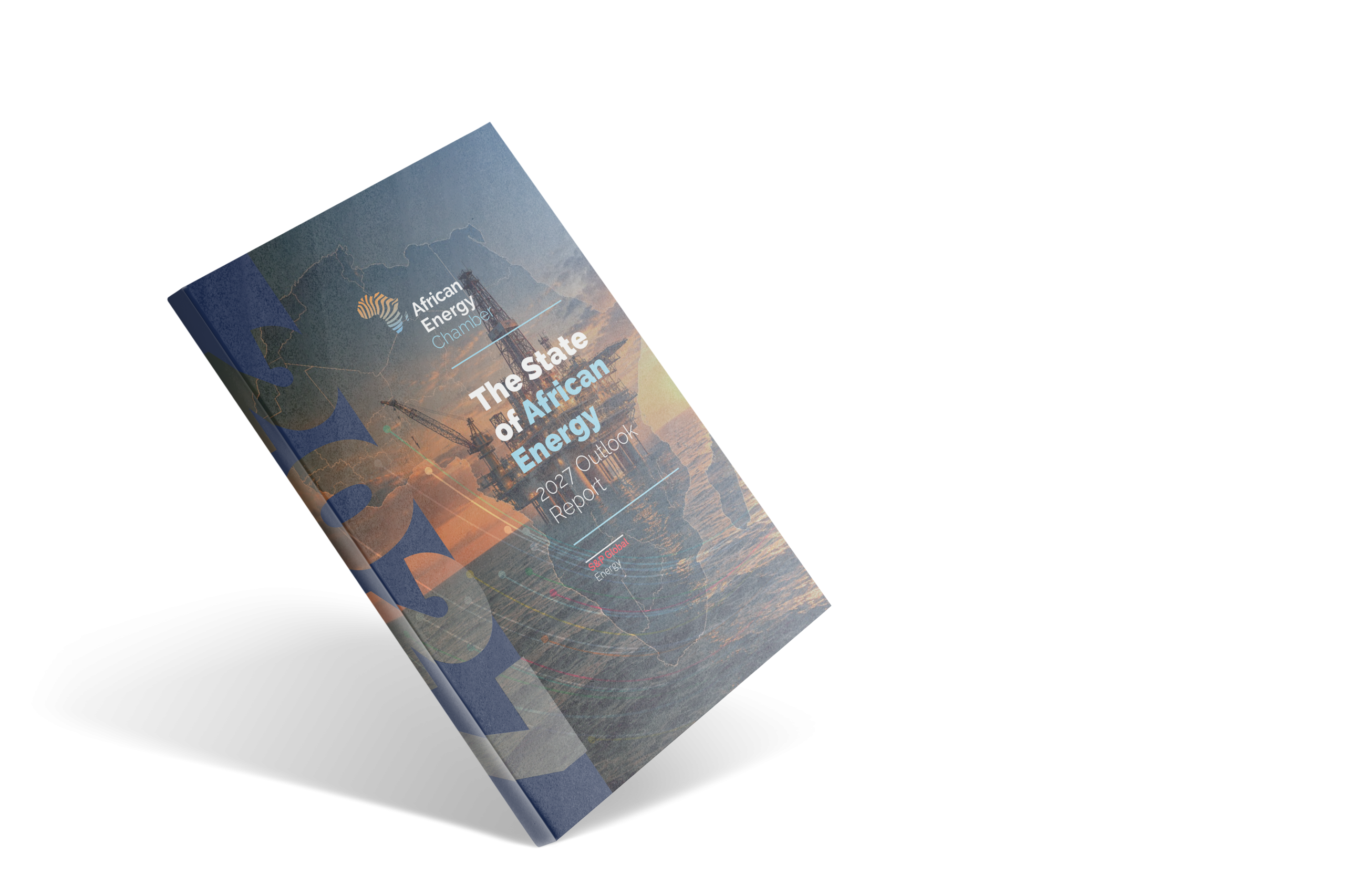
Africa’s upstream sector is set to attract approximately $40 billion in annual investment, with production growth through the end of the decade closely tied to the speed of development. The African Energy Chamber’s (AEC) State of African Energy 2027 Outlook projects continental hydrocarbon output will reach about 11 million barrels of oil equivalent per day (MMboe/d) in 2027 and approximately 12.5 MMboe/d by 2030 as new oil and gas projects start up.
Mozambique, Nigeria, Angola, Libya and Ivory Coast are expected to attract the largest share of capital, while new project sanctions in Uganda, Kenya and Namibia will broaden the production base. The AEC forecast was lowered slightly from last year’s edition after several final investment decisions (FIDs) were postponed, demonstrating how closely continental supply tracks the pace of project sanctioning. With global upstream spending forecast to exceed $500 billion a year, African projects are now competing for increasingly selective capital.
Existing Infrastructure Gives Discoveries a Faster Route to Market
Africa’s resource base can sustain growth well beyond 2030, with the AEC estimating at least 161 billion barrels of oil equivalent in remaining recoverable resources. About 91 billion barrels sit in undeveloped discoveries across Namibia, Mozambique, Tanzania, Uganda and Kenya, where development will require access to finance along with new infrastructure capable of carrying output to market.
Resources located near existing facilities are more likely to progress into production, according to the Outlook. Shell’s $5 billion Bonga North project offshore Nigeria, which reached FID in December 2024, ties 16 subsea wells back to the existing Bonga floating production, storage and offloading (FPSO) vessel and targets peak output of 110,000 barrels per day (bpd).
Speaking at African Energy Week (AEW) 2026 in Cape Town, Ricardo Van-Deste, CEO of Sonangol E&P, noted that infrastructure also determines whether associated gas reaches market. “On reducing flaring, it’s not technology. Technology has been available to the world for decades. It’s probably a lack of infrastructure,” he said. Angola has paired incremental fiscal terms introduced in late 2024 with near-term developments such as Agogo and Kaminho.
Nigeria Moves to Accelerate FIDs
Nigeria now accounts for 40% of African upstream FIDs, up from 4% two years earlier, according to a government review highlighted by the AEC. Reforms introduced deepwater tax incentives and cut contracting timelines at the Nigerian National Petroleum Company (NNPC) to a maximum of six months, down from 36. Crude and condensate output exceeded 1.8 million bpd by July 2026, against a government target of 3 million bpd by 2030.
“The more we FID projects and move them to first oil or gas, the better the country will be,” said Oluwasegun Ogunsanya, Managing Director of Nigerian marginal field operator Emadeb E&P, at AEW 2026. Marginal field operators have less flexibility on spending and execution capacity, he added.
Competitive Fiscal Regimes, Leaner Approvals Draw More Capital
Angola, Algeria, Nigeria and Libya have all introduced reforms to improve project economics, according to the Outlook, while frontier jurisdictions increasingly use technical evaluation agreements to secure early operator commitments. Tarek El Molla, Egypt’s former Minister of Petroleum and Mineral Resources, said the fiscal framework remains the first consideration for investors. “It all starts with a good fiscal regime that can attract investors,” he said at AEW 2026.
El Molla also called on neighboring countries to develop shared infrastructure clusters, pointing to integrated gas and electricity networks in Europe as a reference. “We need to break this endless bureaucracy,” he said.
The AEC expects Sub-Saharan Africa’s share of continental production to exceed earlier forecasts by the end of the decade, supported by Mozambique LNG FIDs in 2025 and 2026 and Namibian projects nearing sanction in 2027 and 2028. Countries that keep fiscal terms stable and approvals short will capture the largest share of the $40 billion invested in African upstream each year, along with the production growth the Outlook projects through 2030.
Download now: https://energychamber.org/report/the-state-of-the-african-energy-2027-outlook-report/
