
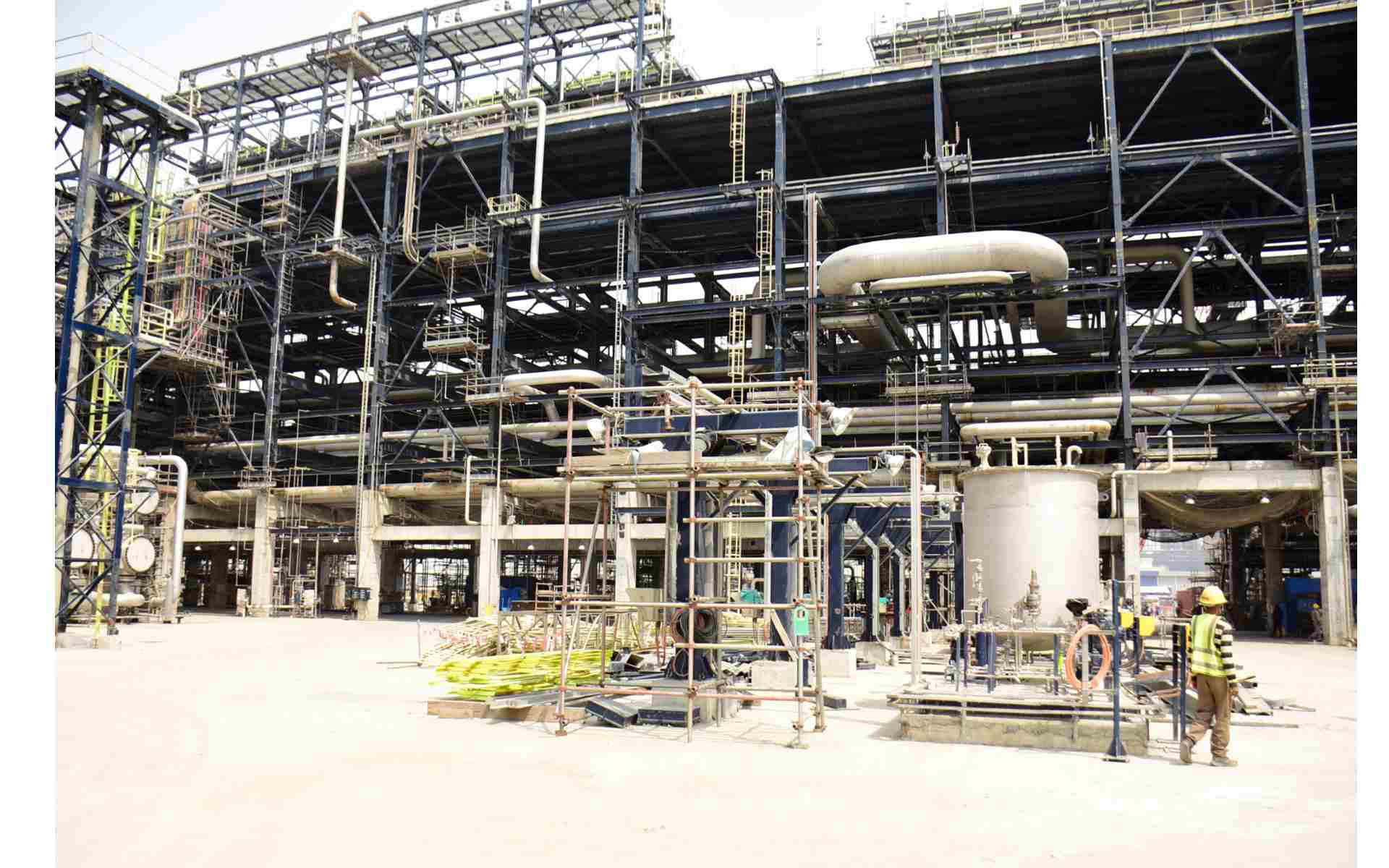
The African Energy Chamber (AEC) welcomes the commencement of construction on Dangote Petroleum Refinery’s second crude processing unit, a 700,000 barrels-per-day (bpd) expansion that will double total capacity to approximately 1.4 million bpd by 2028. The development – reported this week following the groundbreaking at the Lekki Free Zone outside Lagos – cements Nigeria’s emergence as Africa’s dominant refining hub and signals a structural shift in the continent’s downstream value chain.
This expansion builds on the refinery’s rapid operational ramp-up since it began processing crude in 2024 and reached near-full utilization in 2026. Already, the 650,000-bpd facility has fundamentally altered Nigeria’s fuel balance, turning Africa’s largest crude exporter into a net exporter of refined products for the first time in decades. Recent data indicates that domestic fuel imports have fallen sharply as local production now meets the majority of national demand, with surplus volumes of petrol, diesel and jet fuel flowing into regional and international markets.
A Structural Break from Import Dependency
For decades, Africa’s largest oil producer paradoxically imported most of its refined fuels due to limited domestic refining capacity. While the Dangote refinery has already disrupted that model, its second expansion further consolidates this shift.
By raising total capacity to 1.4 million bpd, Nigeria moves closer to sustained self-sufficiency in refined products while generating consistent export surpluses. This reduces pressure on foreign exchange reserves, improves balance-of-payments stability and limits exposure to volatile global refining margins – an issue that has repeatedly triggered fuel price shocks across African economies.
In 2026, with persistent geopolitical disruptions to global shipping lanes and intermittent refinery outages in Europe and Asia, refining resilience has become a strategic advantage. Nigeria’s expanding surplus positions West Africa as an emerging supply hub rather than a structural demand center.
Rewriting African Downstream Investment Logic
The expansion also carries significant implications for investment flows. Historically, capital has been concentrated in upstream oil production, while downstream infrastructure remained underdeveloped. The Dangote complex is reshaping that pattern by demonstrating that large-scale, privately financed refining megaprojects are viable in Africa.
For investors, this signals three structural shifts: downstream assets are increasingly seen as bankable at scale, particularly where domestic demand is large and policy frameworks are supportive. Second, regional fuel trade networks are emerging, with refined products already moving between West and East African markets, as well as into Europe. Finally, integrated energy-industrial hubs are the next frontier, combining refining, petrochemicals and export logistics.
The planned expansion – alongside potential additional projects in East Africa as indicated by company leadership – further suggests the formation of a continental refining network rather than isolated national assets.
Nigeria’s Strategic Leverage in Global Fuel Markets
Nigeria’s growing refining capacity is already reshaping global fuel trade flows. Nigerian jet fuel has entered European markets during periods of tight supply, while African cargoes have displaced traditional suppliers in selected Atlantic Basin destinations. The refinery’s ability to shift between domestic supply security and export arbitrage is becoming a defining feature of its commercial model. At a time when global refining capacity growth remains concentrated in Asia and Europe continues to experience structural closures of older plants, Nigeria’s expansion reinforces West Africa’s emerging role as a marginal supplier in an increasingly tight market.
“What we are witnessing is the end of Africa’s role as a raw materials exporter without industrial depth,” states NJ Ayuk, Executive Chairman of the AEC. “Projects like the Dangote refinery prove that Africans can finance, build and operate world-scale infrastructure that captures value at home. This second expansion is not just about barrels, but about sovereignty, jobs and building the backbone of a competitive African energy economy.”
