
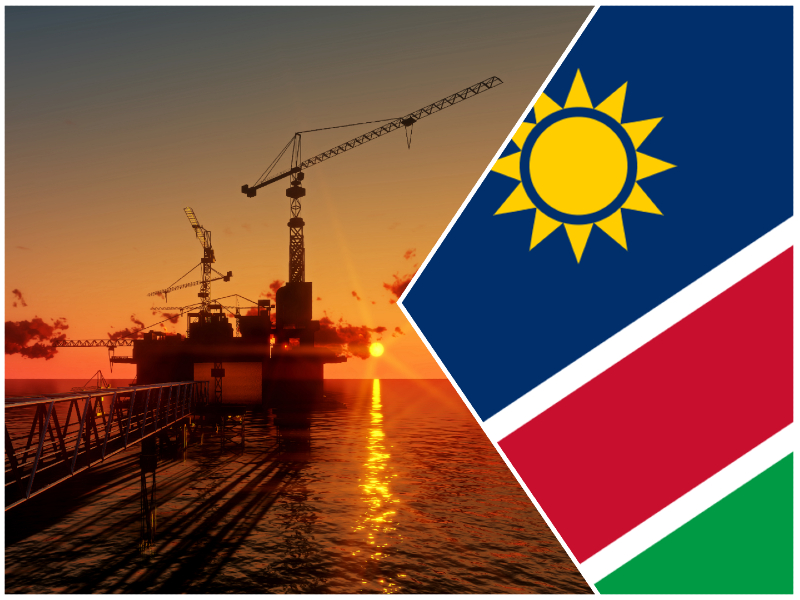
Namibia has emerged as one of the world’s most closely-watched upstream markets following a series of offshore discoveries that have attracted international operators and supported a new wave of exploration investment. The African Energy Chamber’s (AEC) in collaboration with S&P Global Energy, and powered by S&P Global Energy data, State of African Energy 2027 Outlook views the country as central to diversifying Africa’s production base, with over 300,000 barrels per day (bpd) expected to enter production by the mid-2030s.
Yet, as the country moves towards first oil, regulatory delays risk slowing this momentum. The AEC therefore calls on the country to accelerate petroleum reforms, eliminate unnecessary bureaucracy and introduce an aggressive licensing strategy that keeps investors engaged and projects moving forward.
Namibia’s upstream oil and gas sector is rapidly moving from discovery to development, led by TotalEnergies’ Venus and Mopane projects. Targeting production capacity of 150,000 bpd, Venus is currently pursuing a final investment decision (FID), pending agreement on outstanding commercial terms. At Mopane, appraisal drilling is underway across a three-well campaign, with FID planned for 2028. Rhino Resources is leading exploration activities at PEL 85. The company completed the Capricornus-1A appraisal well in June 2026, with a possible FID targeted for 2027.
The country also continues to attract major international energy companies to the market. In November 2026, QatarEnergy agreed to acquire a 25% participating interest in PEL 82 from Chevron. The license covers Blocks 2112B and 2212A in the frontier Walvis Basin. During the same month, bp completed the acquisition of a 60% interest and operatorship of three Walvis Basin licenses. Alongside Eco (Atlantic) Oil & Gas, the company is preparing at least 3,000 km² of 3D seismic acquisition over PELs 99 and 100 in the coming weeks.
“Namibia has done the hard part by proving that its offshore basins hold world-class resources and attracting some of the biggest names in global energy. Now it needs to move. Investors cannot afford to wait indefinitely for licenses, approvals and regulatory clarity. We need to see aggressive acreage licensing, faster decisions and petroleum legislation that gives operators the confidence to invest,” says NJ Ayuk, Executive Chairman of the AEC.
Despite upstream momentum, concerns over commercial terms, regulations and licensing continue to plague the market. Namibia’s Petroleum (Exploration and Production) Amendment Bill offers an opportunity to address regulatory uncertainty. The document restructures the existing regulatory framework, transferring the administration of the sector from the Ministry of Industries, Mines and Energy to the Office of the Presidency. Key changes, according to Cliff Dekker Hofmeyr, include the establishment of the Upstream Petroleum Unit (IPU) to oversee licensing, monitor compliance and management petroleum data. It also includes the transferal of ministerial powers to the IPU.
On October 20, 2026, the National Assembly approved the legislation in principle at its Second Reading, marking a notable step towards its third reading and eventual passing. The bill has, however, faced criticism by the public and opposition parties. Opposition lawmakers walked out of an earlier debate, citing that the bill dilutes regulatory oversight and concentrates power of the energy sector under the presidency. Namibia’s President Netumbo Nandi-Ndaitwah has rebuked these claims, highlighting that the structure aims to streamline regulatory approvals and mitigate license delays.
Namibia’s upstream momentum comes as global interest in African acreage continues to grow, driven by recent discoveries and rising demand. The AEC’s 2027 Outlook show Africa captured two-thirds of global deepwater acreage awarded in 2025, with international oil companies securing more than 200,000 km² along the Atlantic Margin, compared with approximately 30,000 km² in 2024. To maintain this interest, countries including Angola are moving toward permanently available acreage, while others are using reconnaissance permits and technical evaluation agreements to attract early-stage investment. Namibia should consider similar approaches, supported by accessible geological data, digital licensing systems and clearly defined exploration commitments.
“Speed is not the enemy of scrutiny; unnecessary delay is. Namibia has an extraordinary opportunity to become a major African oil producer, but that opportunity will not remain open forever. Move the acreage. Cut the red tape. Honor the contracts. Let capable operators take geological risk. Turn reconnaissance into wells, wells into production, and production into African prosperity,” Ayuk added.
