
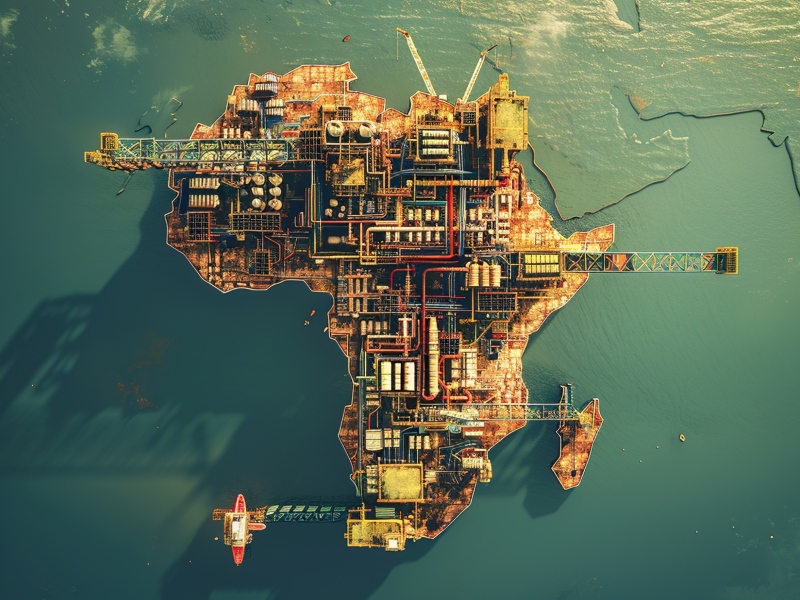
At a time when Africa is working to industrialize, attract investment and build stronger value chains, the potential closure of the United Nations Industrial Development Organization’s Investment and Technology Promotion Office in Germany (UNIDO ITPO Germany) is a step in the wrong direction. For the African Energy Chamber (AEC), which champions private sector-led growth across the continent, this move risks weakening one of the few platforms that actively connects African businesses with European investors and technology partners.
UNIDO ITPO Germany has built its value on execution. It works directly with companies to connect projects with capital, facilitate partnerships and move deals forward – particularly in energy, manufacturing and infrastructure. That kind of hands-on engagement is rare, and it is exactly what Africa needs more of.
The need is clear: Africa requires an estimated $190 billion in energy investment every year through 2030 to meet rising demand and expand access. Yet the continent continues to attract only a fraction of global energy capital, despite its vast resource base and growing demand profile.
At the same time, investor interest in Africa is clearly rising. In recent years, the continent has consistently attracted tens of billions of dollars annually in energy-related foreign direct investment, alongside a growing pipeline of oil, gas and power projects announced across markets such as Mozambique, Namibia, Senegal and Nigeria. Energy companies, infrastructure funds and private investors are actively positioning for opportunities across the continent.
But interest alone does not close deals. Investment happens when there are credible platforms that connect capital to bankable projects and reliable local partners. UNIDO ITPO Germany has been one of the few institutions playing that role in a structured, hands-on way.
Recent tensions between Germany’s Federal Ministry for Economic Cooperation and Development and UNIDO now put the future of the office at risk. For African stakeholders, the consequences would be immediate. Projects in development could stall, partnerships could fall through and years of relationship-building could be lost.
Just as importantly, closing the office sends the wrong signal at the wrong time. Africa is not asking for aid – it is asking for investment and a fair opportunity to compete in global markets. Removing a platform that helps make that happen raises real concerns about long-term commitment from partners.
“Africa doesn’t have a shortage of opportunities; it has a shortage of platforms that can turn those opportunities into deals,” said NJ Ayuk, Executive Chairman of the AEC. “UNIDO ITPO Germany has been doing exactly that. If you remove one of the few structures that actually connects investors to African projects, you don’t just slow progress – you make it harder for capital to flow where it’s needed.”
Africa’s energy and industrial future will depend on partnerships that deliver real outcomes. European institutions have a role to play, but that role must go beyond policy statements and translate into practical engagement that helps move projects forward. For its part, UNIDO ITPO Germany has helped build networks, support project development and connect African businesses with European investors and technology partners in a structured, results-driven way. This kind of operational infrastructure is not easy to build – and once lost, it is not easily replaced.
The AEC calls on policymakers and partners to reconsider this decision. Strengthening platforms that facilitate investment should be the priority, especially at a time when Africa is pushing to scale growth and industrial development. Investment partnerships should be protected and expanded, not reduced, as momentum builds.
Stakeholders are encouraged to share their perspectives and support efforts to maintain this platform by participating in the following survey:
