
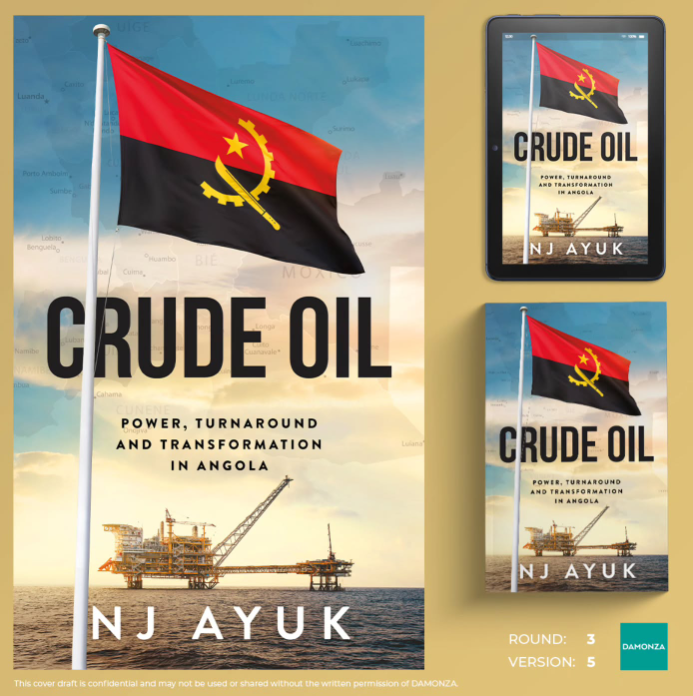
At one level, this is a book about Angola’s oil and gas industry; its origins, evolution, challenges, and ongoing transformation. At a deeper level, however, it is a book about leadership, governance, institutional reform, and the complex relationship between natural resources and national development. It is this broader perspective that makes the book particularly relevant not only to Angola but also to resource-rich nations across Africa and beyond.
Having spent much of my professional career in the energy industry, I approached this book expecting a discussion of petroleum policy, investment, production, and energy economics. Those themes are certainly present. What I found more compelling, however, was the author’s effort to place Angola’s energy story within the wider context of its history, politics, geography, and people.
Ayuk begins by taking the reader beyond the oil fields and into the foundations of the Angolan state. The early chapters provide valuable context on Angola’s geography, colonial experience, natural resource endowment, and the historical forces that shaped its modern economy. This is an important contribution because it reminds us that resource industries do not operate in a vacuum. The opportunities and challenges confronting the energy sector today are often rooted in decisions, institutions, and events that stretch back decades, if not centuries.
The book’s central narrative follows Angola’s remarkable journey from conflict and post-war reconstruction to becoming one of Africa’s most significant hydrocarbon producers. What I found particularly refreshing is that Ayuk resists the temptation to reduce Angola’s experience to the familiar narratives that often dominate discussions about resource-rich nations. He acknowledges the challenges of oil dependence, exposure to commodity price cycles, and the governance weaknesses that have at times constrained the broader developmental impact of resource wealth. Yet he also recognises the transformative role the sector has played in rebuilding the nation, attracting investment, creating infrastructure, and positioning Angola as a major player within Africa’s energy landscape. Rather than presenting oil as either a blessing or a curse, the book makes a more nuanced and ultimately more convincing argument: that outcomes are determined less by the resource itself and more by the quality of leadership, institutions, and policy choices that govern it.
This is perhaps the book’s most important insight.
Throughout the narrative, a recurring theme emerges: resources create opportunities, but institutions determine whether those opportunities are realised. Angola’s story demonstrates both sides of this equation. The country benefited enormously from its hydrocarbon wealth, but it also experienced the vulnerabilities associated with excessive dependence on a single commodity. The lessons are neither uniquely Angolan nor uniquely African. They are relevant to any nation seeking to transform natural wealth into sustainable economic progress.
The chapters examining the reform agenda under President João Lourenço are among the strongest in the book. Ayuk provides a detailed account of efforts to strengthen governance, improve transparency, restructure key institutions, attract investment, and reposition Angola within an increasingly competitive global energy landscape. Particularly insightful is the discussion surrounding the creation of the National Agency for Petroleum, Gas and Biofuels (ANPG) and the broader effort to separate regulatory oversight from commercial operations. These reforms reflect a recognition that institutional credibility is one of the most valuable assets any resource-producing nation can possess.
Equally noteworthy is the book’s treatment of natural gas. At a time when energy discussions are increasingly framed through the lens of transition and decarbonisation, Ayuk argues that Africa’s development realities must remain central to policy decisions. The book presents gas not simply as an export commodity, but as a strategic resource capable of supporting industrialisation, power generation, economic diversification, and energy access. Whether one agrees with every aspect of this argument or not, it is a perspective that deserves serious consideration within contemporary energy debates.
One of the aspects I appreciated most was the author’s optimism about Africa’s future. Importantly, this optimism is not naïve. It is grounded in the belief that countries can learn from past mistakes, strengthen institutions, improve governance, and create more inclusive models of growth. The book recognises the scale of the challenges that remain while also highlighting the progress that has been achieved.
As with any work that addresses contemporary reforms and ongoing political developments, readers may differ in their assessment of certain conclusions. However, the value of the book does not lie in whether one agrees with every argument. Its value lies in the conversation it stimulates about how resource-rich nations can better manage their assets, build stronger institutions, and create lasting prosperity for future generations.
What ultimately distinguishes Crude Oil: Power, Turnaround and Transformation in Angola is that it moves beyond production statistics, licensing rounds, and investment figures. At its core, it is a book about transformation. It explores how a nation seeks to redefine itself, strengthen its institutions, and position its natural resources as instruments of development rather than dependence.
For energy professionals, policymakers, investors, academics, and students of African development, this book offers both insight and perspective. It is informative without being overly technical, accessible without sacrificing substance, and optimistic without ignoring complexity.
The most enduring lesson from this book is one that extends far beyond Angola’s borders. The future of resource-rich nations will not be determined solely by the abundance of their natural resources, but by the quality of their leadership, the strength of their institutions, and their ability to convert resource wealth into broad-based economic opportunity.
In that respect, Angola’s story is not simply Angola’s story. It is part of a much larger African story, one that continues to unfold.
