
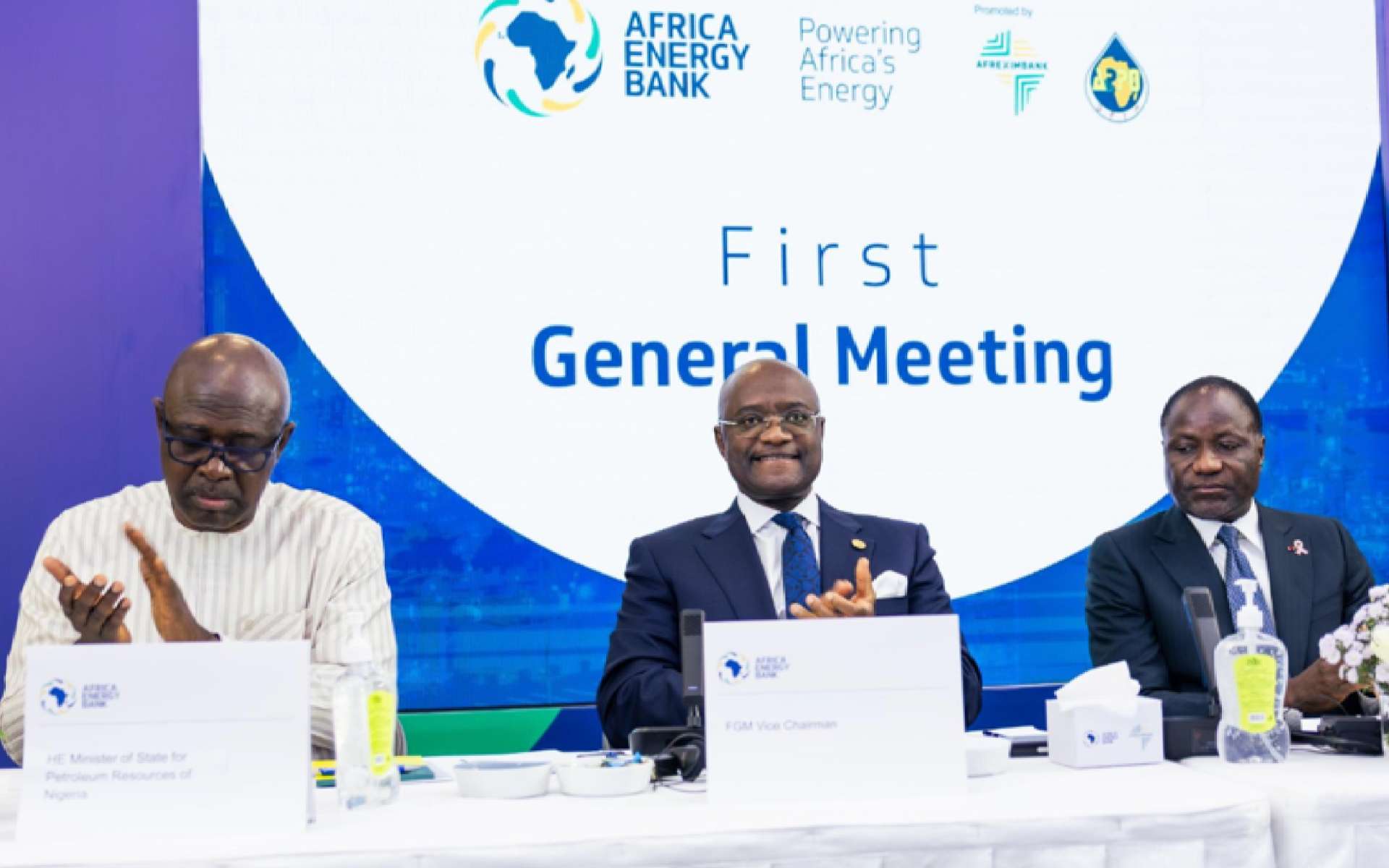
The African Export-Import Bank (Afreximbank) and the African Petroleum Producers’ Organization (APPO) formally established the Africa Energy Bank (AEB) at the bank’s inaugural general meeting in Abuja on October 31. With $5 billion in authorized capital, the institution will finance projects across the energy value chain. The meeting appointed Helmy Ghazi, formerly Deputy CEO of HSBC Bank Egypt, as the bank’s first President and seated its inaugural Board of Directors.
The African Energy Chamber (AEC), as the voice of the African energy sector, welcomes the launch and strongly supports Afreximbank and APPO in delivering an institution the Chamber has championed since 2024. The AEB arrives as traditional financiers continue to step back from oil and gas, even as African economies rely on hydrocarbons to power their growth. The Chamber views the bank as a decisive answer to years of external pressure on African energy investment, placing financing decisions in the hands of African institutions.
“For too long, Africa has been told which of its resources it is allowed to develop and who will be willing to pay for it. The Africa Energy Bank changes the conversation. When African governments and African investors put their own capital behind African projects, nobody else gets to decide when our projects move forward,” states NJ Ayuk, Executive Chairman of the AEC.
Afreximbank and APPO estimate the continent’s energy investment needs at $200 billion. Speaking at African Energy Week (AEW) 2026 in Cape Town, APPO Secretary General Farid Ghezali confirmed the bank will begin financing projects in early 2027 under a corridor-based model. It will fund clean cooking and power generation alongside export and domestic energy infrastructure. The AEC strongly supports the balance, which reflects the Chamber’s position that Africa’s resources must first serve Africans. The bank’s opening phase of ten flagship projects, with Nigeria, Angola and Libya among the target markets, will put the principle into practice.
The AEB builds on a wider shift toward African-led energy finance. In recent months, Afreximbank has committed $2.5 billion in underwriting to a $4 billion syndicated facility for Dangote Petroleum and Petrochemicals and a $750 million reserve-based lending facility for Heirs Energies. Both deals are evidence African lenders can carry energy transactions of significant scale.
“Now that the bank has its leadership, the priority is getting the first deals signed and the first projects built,” Ayuk added.
Africa has waited long enough for others to finance its energy future. The AEB gives the continent the means to finance it itself, and the AEC calls on African governments and investors to commit the capital needed to make the bank a success.
