
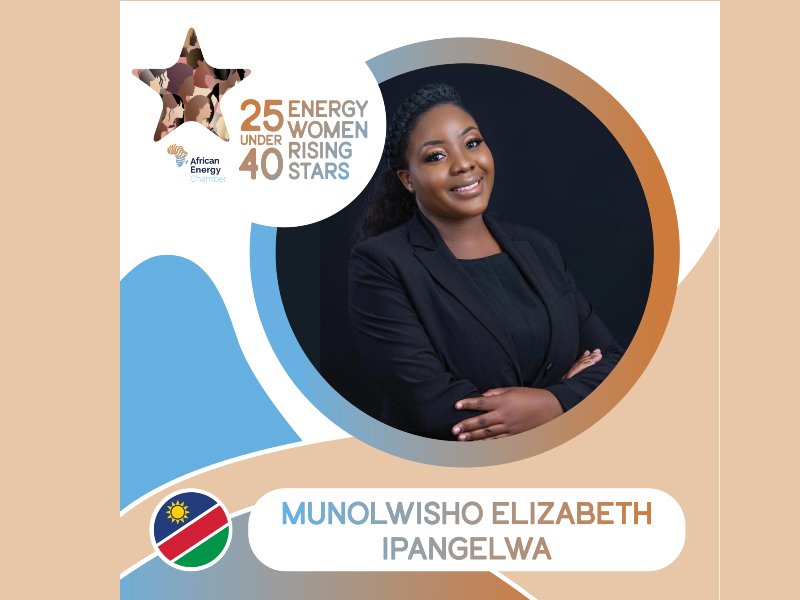
The 25 Under 40 Energy Women Rising Stars is a list celebrating the remarkable achievements made by women to drive Africa’s energy sector growth. This year’s list recognizes Munolwisho Elizabeth Ipangelwa, Green Hydrogen Advisor at GIZ, for her outstanding contributions to enhance gender inclusivity across the oil, gas and green hydrogen sectors in Namibia. In an exclusive interview with the African Energy Chamber, Ipangelwa discusses how she is driving Namibia’s green industrialization.
Could you provide a brief overview of your journey in the energy industry that led to your current role? What are some key achievements or milestones that you are particularly proud of?
My career started as an intern at the National Petroleum Corporation of Namibia, where I was later promoted to Contracts and Commercial Officer, and eventually, In-House Legal Counsel. In this capacity, I was responsible for drafting contracts and providing legal advice to various units. My expertise in legal and contractual matters led to my appointment as the Company Secretary and Legal Advisor at Powercom, a role I held until being selected as Green Hydrogen Advisor at GIZ. In addition, I serve as a founding Director for the Women in the Oil and Gas Energy in Namibia (WOGEN).
In my current role, I provide technical advisory services to the Ministry of Mines and Energy, as well as to the Namibian Green Hydrogen Program. One of the most significant achievements during my tenure has been convening Namibia’s first Regulatory Inception workshop, which led to the development of a Legislative Roadmap for the Green Hydrogen industry in Namibia.
I am also proud of my contributions to Namibia’s Green Industrialization strategy, which focuses on the country’s potential in areas such as iron, lithium and rare earth elements, key resources for the global transition to clean energy. Another core achievement has been the Masterclass program I spearheaded, which educates and empowers young people, women and disadvantaged communities across Namibia about the green hydrogen industry. The program has benefitted approximately 500 people over the past year.
Le secteur de l'énergie est connu pour sa complexité. Quels sont les principaux défis auxquels vous avez été confronté et comment les avez-vous relevés pour atteindre vos objectifs ?
One significant hurdle has been navigating a traditionally male-dominated space where securing opportunities, financing and resources often requires more persistence. Through WOGEN, I am supporting women within the energy sector. However, even with this platform and the support of incredible female leaders in the sector, securing financing for women-led initiatives remains a challenge.
Another significant challenge has been the persistent underrepresentation of women in key leadership roles within the energy sector. I’ve organized an energy social event for women in the past to empower women to rise to leadership roles.
Quels conseils donneriez-vous aux jeunes femmes qui aspirent à exceller dans le secteur de l'énergie ? Y a-t-il des stratégies ou des mentalités spécifiques qui vous ont aidée à surmonter les obstacles et à atteindre votre position actuelle ?
Be relentless in pursuing your goals and ensuring your voice is heard. This industry can be challenging, but it’s crucial to claim your space with confidence and determination. Find a specific area of the energy sector that you are passionate about and invest in continuously learning and growing within that niche. Build strong networks and take advantage of women fellowship programs, mentorship opportunities and industry events that provide both knowledge and connections. Surround yourself with supportive peers and mentors who encourage your growth and success. Don’t be afraid of failure.
Une carrière dans l'énergie peut être exigeante. Pouvez-vous nous décrire une journée typique de votre vie ?
My days are often filled with meetings, project planning and technical advisory work. Mornings usually start with reviewing the latest reports and preparing for discussions with industry stakeholders. Afternoons are spent working on strategies, drafting documents and coordinating efforts between government bodies and private sector partners to push important projects forward. I also enjoy reading, keeping myself updated with the latest industry trends and exploring new topics in the energy sector.
À l'avenir, quels changements ou progrès espérez-vous voir dans le secteur de l'énergie ? Comment envisagez-vous votre rôle dans l'élaboration de cet avenir ?
I envision the energy sector playing a transformative role in shaping Africa’s future, creating jobs for young people, women and disadvantaged communities. I hope to see the creation of robust local content and value chains that allow African nations to fully harness and benefit from their natural resources. With the growing focus on energy and emerging sectors like green hydrogen, there is an opportunity to position Africa as a global leader in clean energy solutions. In terms of curing energy poverty, I see the energy sector expanding its focus to make energy access a priority for every African. I see my role as continuing to champion policies and projects that ensure Africans receive their fair share of the benefits. Whether it’s advocating for local content in energy projects or driving green industrialization strategies, I aim to be at the forefront of shaping a future where the energy sector contributes meaningfully to African development.
