
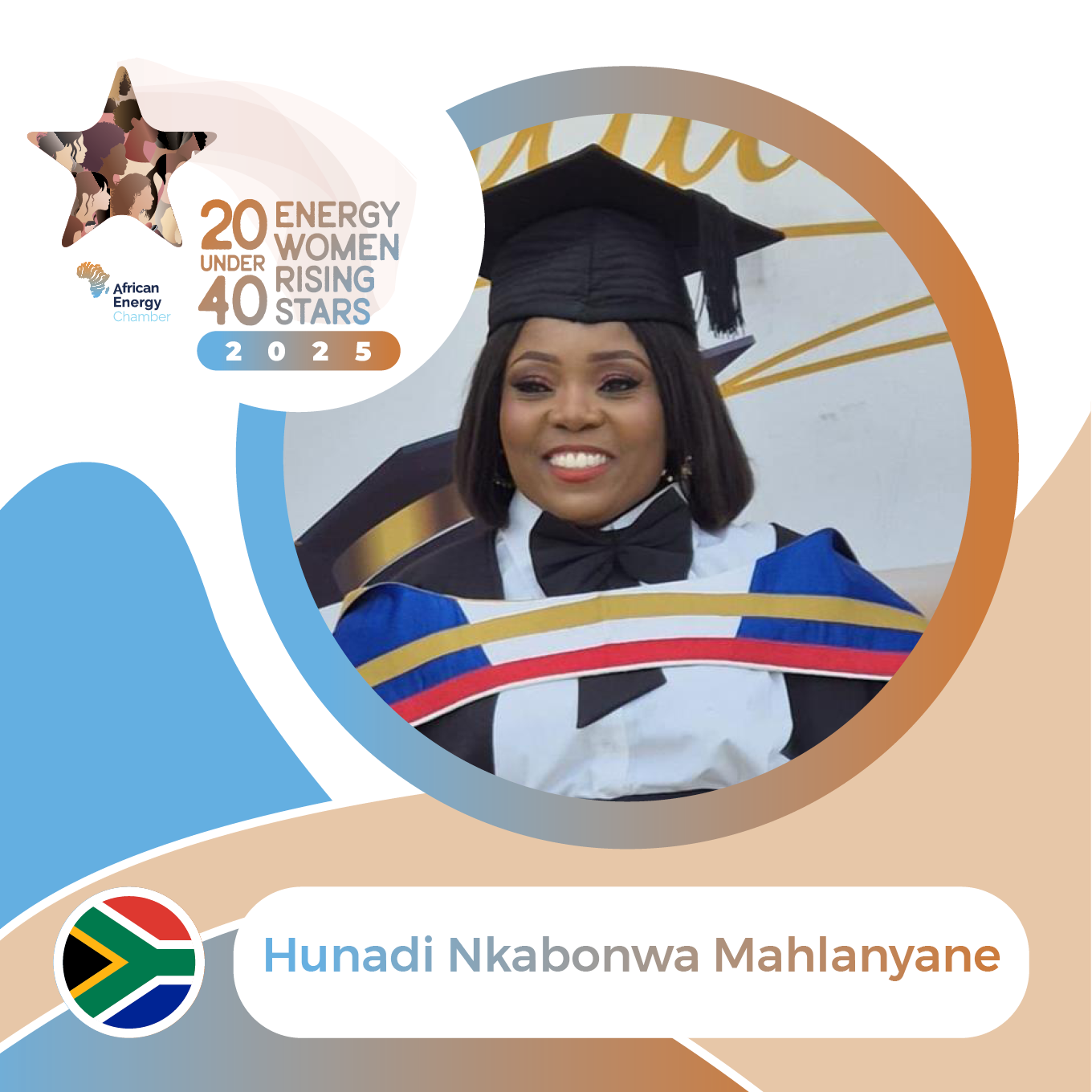
As South Africa strives to transform its power systems, innovators such as Hunadi Nkabonwa Mahlanyane are poised to play a central role in improving access to reliable electricity. Having recently been appointed Coal and Civil Maintenance Line Manager at South Africa’s state-owned utility Eskom, Mahlanyane is gearing up to bring innovative solutions to the country’s power market.
Veuillez donner un bref aperçu de votre parcours dans le secteur de l'énergie qui vous a conduit à votre fonction actuelle. Quelles sont les principales réalisations ou étapes dont vous êtes particulièrement fier ?
My career in the energy sector began in October 2007 at Eskom’s Hendrina Power Station, when I joined as a learner apprentice in the Control & Instrumentation trade at just 19 years old. Over the years, I’ve progressed through several technical and leadership roles: in 2010, I qualified as a Mechanician; in 2011, I was promoted to Technician; in 2017, I took on the challenge of Acting Civil Maintenance Supervisor during a critical period of departmental underperformance; and in 2020, I was officially appointed as Senior Mechanical Supervisor in Civil Maintenance.
My achievements include best Supervisor of the Year (2023) and Eskom Generation Managers Award – Sinobuntu Category (2015). I also spearheaded a sanitary towel donation program that positively impacted local schools. We received another Sinobuntu Category (2023) for the initiative. As Deputy Chairperson of the NUM Hendrina Branch (2022), I played a pivotal role in organizing impactful Women’s Day celebrations and addressing organizational women’s issues. I am a passionate advocate for gender equity as a champion of the Eskom Women Advancement Program, working to amplify women’s voices and leadership within the organization.
Le secteur de l'énergie est connu pour sa complexité. Quels sont les principaux défis auxquels vous avez été confronté et comment les avez-vous relevés pour atteindre vos objectifs ?
The energy sector is dynamic and demanding, and my journey at Eskom has been shaped by several significant challenges that tested both my technical expertise and leadership capacity. One of the earliest challenges I faced was moving from a purely technical role into leadership. Working in a power generation environment also means that decisions carry weight. I developed a proactive maintenance culture, improved risk assessments, and fostered cross-functional collaboration to minimize downtime and ensure compliance. Other challenges include balancing career growth with education and championing women in a male-dominated industry. What guided me through was resilience, continuous learning, empathy and leadership and purpose.
Quels conseils donneriez-vous aux jeunes femmes qui aspirent à exceller dans le secteur de l'énergie ? Y a-t-il des stratégies ou des mentalités spécifiques qui vous ont aidée à surmonter les obstacles et à atteindre votre position actuelle ?
The energy industry may be complex and traditionally male-dominated, but it’s also full of opportunity for women who are determined to lead, innovate, and transform the future. Here’s what I’ve learned on my journey: own your own space. You won’t always walk into rooms where you’re expected. That’s okay. Walk in anyway. Invest in your education and skills. Knowledge is power. Seek out mentors, training programs, and stretch assignments that challenge you. Adopt a growth mindset – obstacles will come, but you need to see challenges as stepping stones, not roadblocks. Build a support network and lead with purpose and passion. You don’t have to fit the mold to succeed – you can reshape it.
Une carrière dans l'énergie peut être exigeante. Pouvez-vous nous décrire une journée typique de votre vie ?
In the high-stakes world of power generation, no two days are exactly alike – but consistency, discipline, and leadership are the constants. A begin the day at 5:30 with a quick scan of overnight reports or alerts. I prioritize tasks and mentally prepare for a fast-paced schedule. At 7:00, I arrive at the power station or operations site and conduct a walkabout to assess equipment, safety compliance, and team readiness. I have a morning briefing at 8:00, where I review maintenance schedules, operational targets, and any urgent issues. From 9:00–12:00, I conduct field oversight and problem solving. I take a short lunch at 12:00, connecting with junior staff or peers, and between 13:00 and 15:00, I participate in strategic meetings and reporting. From 15:00–16:30, I dedicate time to employee development programs or mentorship initiatives, and in the evening, I study and dedicate time to family.
À l'avenir, quels changements ou progrès espérez-vous voir dans le secteur de l'énergie ? Comment envisagez-vous votre rôle dans l'élaboration de cet avenir ?
I envision an energy sector that is resilient, inclusive, and sustainable – one that not only meets the demands of today but secures the future for generations to come. As part of Eskom, I’m proud to contribute to the mission of ending load shedding and restoring energy reliability across South Africa. This is more than a technical challenge – it’s a national imperative, and I’m deeply committed to being part of the solution.
I hope to see an accelerated transition to renewable energy; modernized infrastructure; workforce transformation; and community-centered energy solutions. The energy sector is at a turning point, and I’m ready to help steer it toward a future that’s powered by innovation, guided by purpose, and sustained by people. Being part of Eskom’s transformation journey – and potentially the Just Energy Transition project – is not just a career goal; it’s a calling.
