
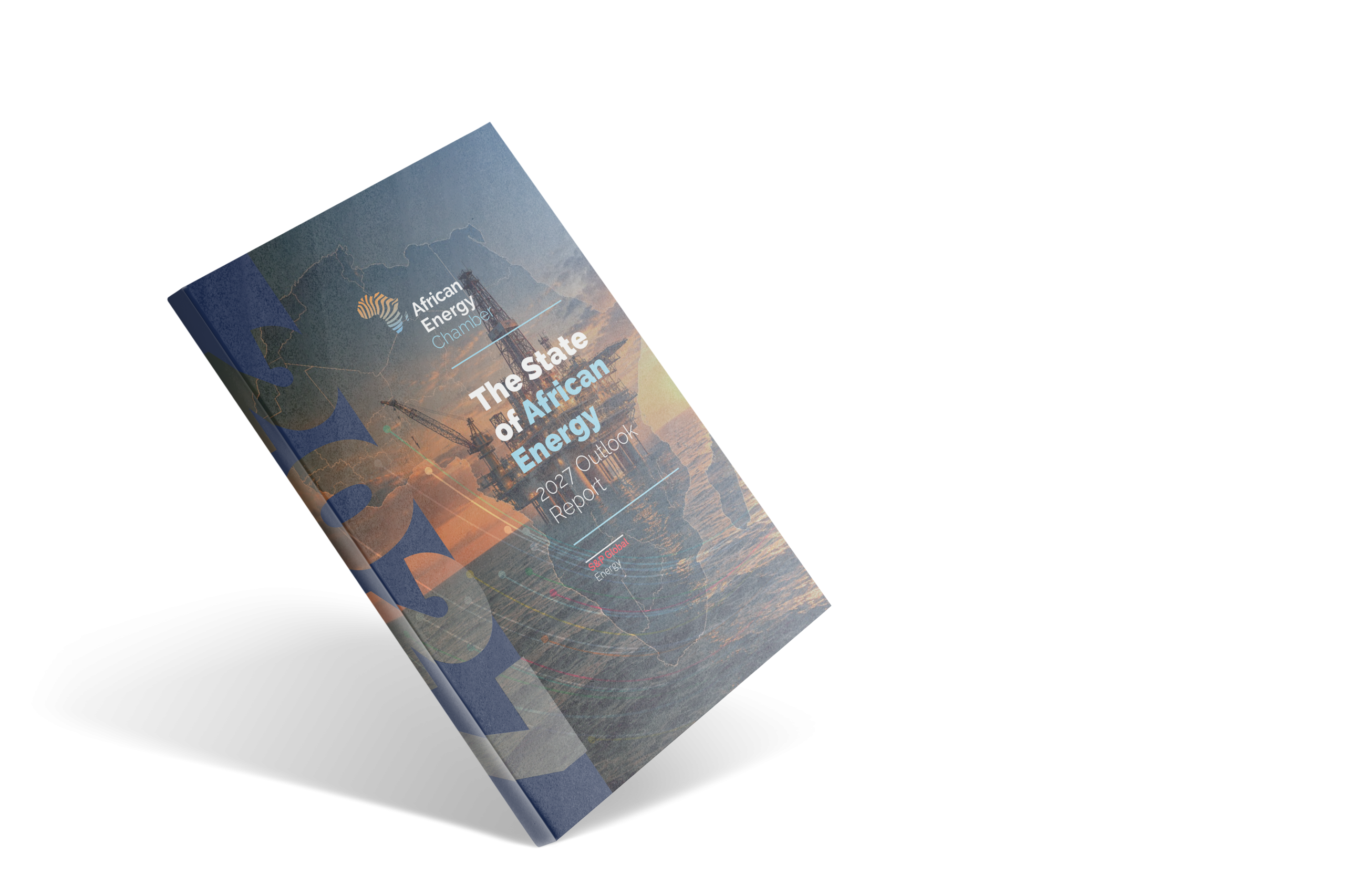
Africa’s hydrocarbon production is set to reach approximately 12.5 million barrels of oil equivalent per day (MMboe/d) by 2030, up from about 11 MMboe/d in 2027, according to The State of African Energy 2027 Outlook, by the African Energy Chamber (AEC) in collaboration with S&P Global Energy, and powered by S&P Global Energy data, established producers will supply most of the new output, while emerging producers account for a rising share of growth.
Top Producers Turn to Gas and Deepwater Projects to Sustain Output
Algeria, Nigeria, Libya, Angola and Egypt are expected to represent roughly 80% of continental output, with operators pursuing gas developments, deepwater projects and brownfield optimization to offset decline at maturing fields. In Angola, where incremental fiscal terms introduced in 2024 aim to draw investment into mature offshore assets, national oil company Sonangol is targeting a 10% increase in operated production by 2030. “Every commitment must translate into production and efficiency,” said Edson Pongolola, Director of Planning and Management Control at Sonangol, during African Energy Week (AEW) 2026 in Cape Town.
Nigeria’s crude and condensate output exceeded 1.8 million barrels per day (bpd) in July 2026, against a government target of 3 million bpd by 2030 that will require the delivery of major deepwater projects and sustained security gains. “The question is: will companies be able to move fast enough to reach this target?” said Oluwasegun Ogunsanya, Managing Director of Emadeb E&P, at AEW 2026. Olawale Ayeni, the company’s Chief Operating Officer, called for targeted incentives to help marginal field developers bring assets online quickly.
Ivory Coast and Mozambique Build Momentum Through Offshore Oil and LNG
In Ivory Coast, Eni took a final investment decision (FID) on Baleine Phase 3 in May 2026, a development the AEC says could more than double national production. Saipem’s Santorini drillship is mobilizing for a long-term development drilling program of more than 630 days in the field. In Mozambique, four Rovuma Basin liquefied natural gas (LNG) projects are scheduled to start up, beginning with Eni’s Coral Norte floating LNG unit in 2028, followed by TotalEnergies’ Mozambique LNG in 2029 and ExxonMobil’s Rovuma LNG in the early 2030s.
“By 2035, we expect that all the projects should be under production. At that point, it would be north of 38-40 mtpa,” said Mevace Muhai, Vice President of Exploration and Production at Mozambique’s Empresa Nacional de Hidrocarbonetos (ENH), at AEW 2026.
Uganda, Kenya and Namibia Prepare for First Production
Uganda’s Lake Albert developments will export crude through the East African Crude Oil Pipeline (EACOP), with the Uganda National Oil Company telling delegates at AEW 2026 that first oil is expected before the end of June 2027. Kenya’s Lokichar development is expected to produce around 20,000 bpd in its first phase, with timing tied to export infrastructure and logistics. In Namibia, TotalEnergies’ 150,000-bpd Venus development and the 170,000-bpd Mopane project could lift output above 300,000 bpd by the mid-2030s.
Among the emerging producers, Uganda is closest to first oil, while Mozambique and Namibia offer the largest volume upside through LNG and deepwater oil, respectively. Several projects behind the Outlook’s 2030 forecast, including Baleine Phase 3, Coral Norte and the Lake Albert fields, are under development. Growth beyond 2030 will be determined by the next round of FIDs in Namibia and Mozambique and the completion of export infrastructure such as EACOP.
Download now: https://energychamber.org/report/the-state-of-the-african-energy-2027-outlook-report/
