
Angola has spent the better part of a decade using targeted policy to loosen its economy’s dependence on crude oil and build a natural gas industry alongside it. The strategy produced its clearest result in November 2025, when the New Gas Consortium (NGC) commissioned the country’s first dedicated non-associated gas plant at Soyo, a $4 billion facility that treats gas as a primary resource rather than a byproduct of the oil economy.
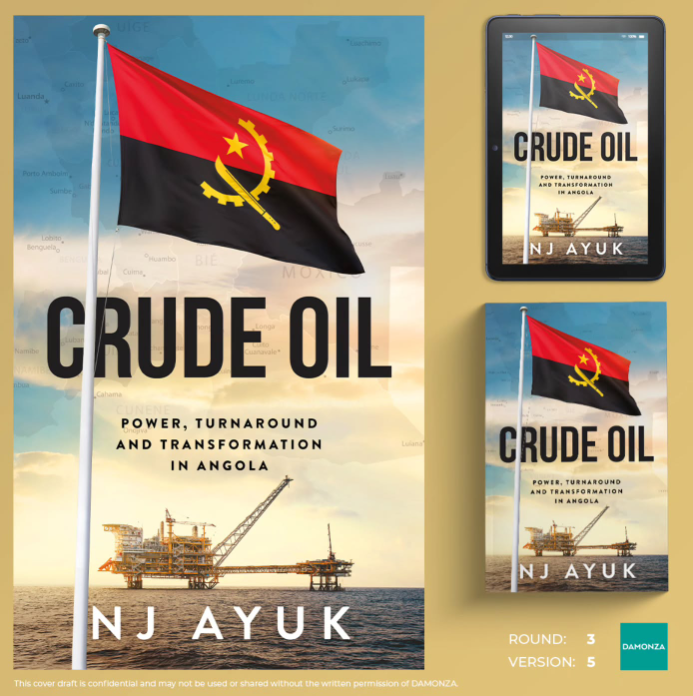
Angola’s diversification effort has been building for years – and gas has become the centerpiece of the next phase. These dynamics are examined in Crude Oil: Power, Turnaround and Transformation in Angola by NJ Ayuk, Executive Chairman of the African Energy Chamber (AEC), now available globally. The book traces Angola’s path from an oil economy that flared and reinjected most of its gas toward one that treats the resource as a pillar of growth, arguing that the legislative groundwork laid since 2018 is what turned gas from a neglected resource into an investable asset class.
Policy Reform Rewrote the Rules for Gas
Angola’s gas pivot rests on a stack of legislation built deliberately over several years. A special legal and fiscal regime for natural gas, introduced by presidential decree in 2018, opened prospecting, development, production and sale of both associated and non-associated gas to investment for the first time. A companion Gas Monetization Law, also passed in 2018, paired with the country’s Gas Master Plan to set out a framework for building gas infrastructure and pricing the resource for export and domestic use.
The reforms went further as the sector matured. As Crude Oil documents, amendments to the Petroleum Activities Law added gas-specific incentives, including a ten-year tax holiday for new gas developments and reduced royalties for non-associated gas, with licensing channeled through the National Agency for Petroleum, Gas and Biofuels (ANPG). Angola’s Minister of Mineral Resources, Oil and Gas, Diamantino Azevedo, said the country had established “a modern, competitive and attractive legal and fiscal regime” for the development of gas not associated with oil, opening the door to structuring projects of this kind.
The New Gas Consortium Proves the Model
The Soyo plant is the first project to test that framework at scale. Operated by Azule Energy, the 50:50 joint venture between bp and Eni, alongside Cabinda Gulf Oil Company, state oil company Sonangol E&P and TotalEnergies, the facility processes gas from the offshore Quiluma and Maboqueiro fields. Once fully ramped, it will handle around 400 million standard cubic feet per day (mmscf/d) of gas and 20,000 barrels of condensate, feeding the existing Angola LNG plant as well as domestic power and future fertilizer production. The project reached full operations six months ahead of schedule, with first gas from Quiluma delivering an initial 150 mmscf/d.
Exploration Points to a Longer Runway
Recent drilling suggests the policy framework is now pulling capital toward standalone gas. In July 2025, Azule Energy and partners Equinor, Sonangol E&P and Angolan independent Acrep announced a discovery at the Gajajeira-01 well in Block 1/14, the first well in Angola drilled specifically for non-associated gas. The find revealed potential volumes exceeding one trillion cubic feet of gas and up to 100 million barrels of condensate, confirming the gas potential of the Lower Congo Basin beyond the legacy fields that have anchored production to date.
“The success of Angola’s gas strategy sends a powerful message to investors: when governments provide regulatory certainty and a clear commercialization pathway, capital follows. The NGC and recent gas discoveries are proof that Angola has created an environment where gas projects can move from concept to commercial reality,” states Ayuk.
Angola moved from legislation to a producing non-associated gas plant and a dedicated gas discovery within roughly seven years, giving other African producers a documented path from policy design to monetized reserves. With the Gas Monetization Law and Gas Master Plan now anchoring a visible project pipeline, the country offers a blueprint for converting a stranded resource into export revenue, power and industrial feedstock.
