
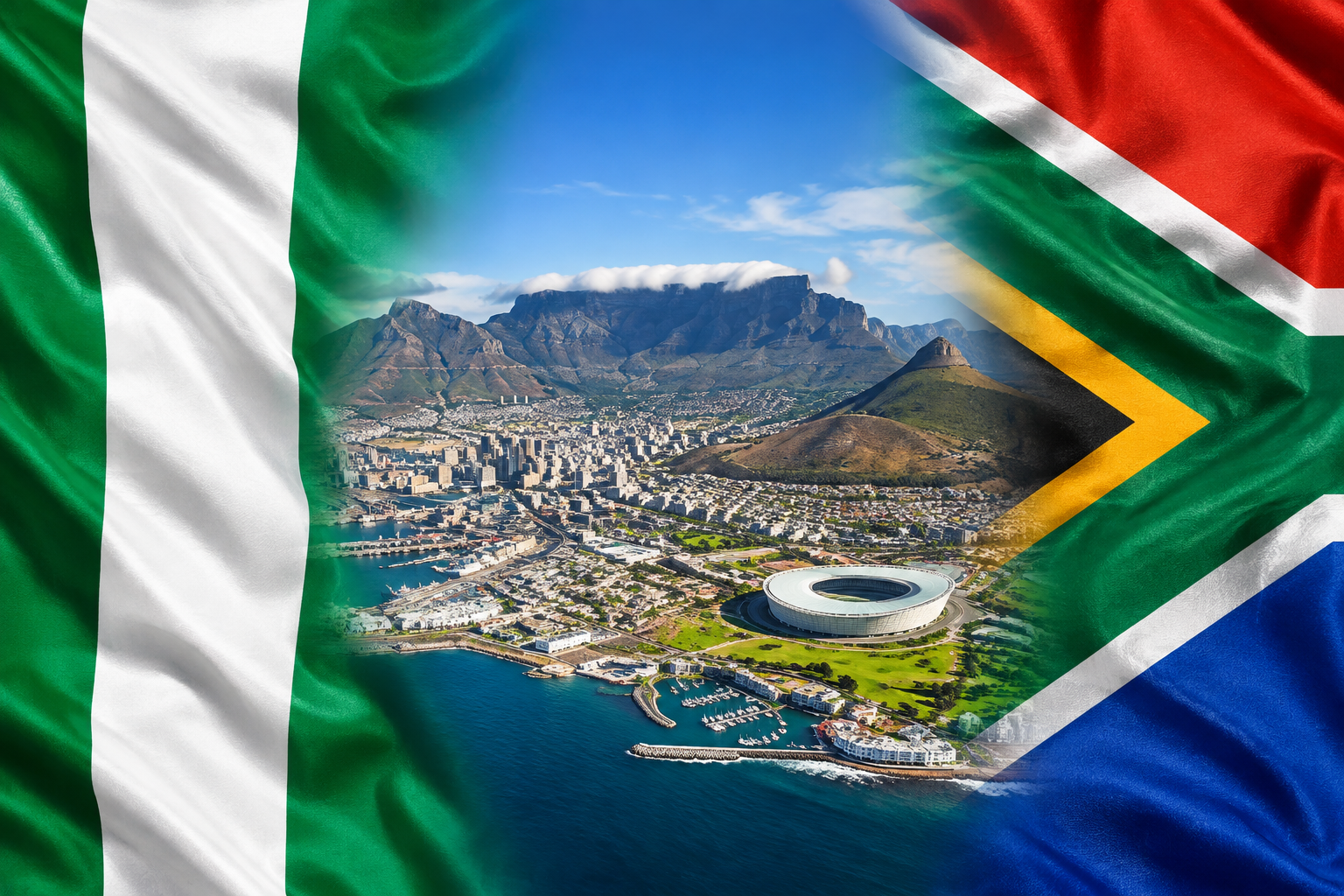
Ahead of African Energy Week (AEW) 2026 in Cape Town, the African Energy Chamber is calling on continental leaders to safeguard cross-border investment, streamline visa-free travel while prioritizing economic sovereignty over diplomatic division.
AEW stands today as the largest and Africa’s most consequential platforms for investment, financing, and practical cooperation in energy. Taking place in Cape Town on October 12 to 16, 2026, the gathering is expected to bring together more than 10,000 delegates from over 100 countries. That scale alone makes clear this is not a narrow industry meeting; it is a continental convening with global reach.
We recognize the seriousness of the current diplomatic tensions between Nigeria and South Africa and we condemn any violence or mistreatment of African migrants. But this moment must not be allowed to shut the door on dialogue, investment and practical cooperation across the continent.
Energy is one of the few sectors capable of bringing Africans together around shared growth, jobs, industrial development and regional integration. It must not be treated as collateral damage in a broader political dispute. The commercial ties between Nigeria and South Africa are too important, and the broader network of African energy relationships is too valuable, to be weakened by the heat of the moment.
AEW is organized by the African Energy Chamber in partnership with Afreximbank and the African Petroleum Producers Organization, institutions that have worked with determination to advance African energy sovereignty and African-led solutions to African challenges. The African Energy Chamber is not merely hosting a conference; it is leading a movement for African ownership, African industry and African progress.
This movement is needed because the continent still faces a hard and unforgiving truth. According to the International Energy Agency, roughly 600 million Africans still lack access to electricity and about 900 million remain without access to clean cooking. This is not a statistic to be filed away and forgotten. It is a development emergency that affects children studying by candlelight, mothers cooking over dangerous fuels, hospitals struggling with power reliability and businesses forced to operate beneath the weight of inadequate infrastructure.
Africa also continues to face a major energy financing gap, with recent reporting placing the annual shortfall at between $67.5 billion and $95 billion. If Africa is to power its people, industrialize its economies and secure its future, then Africans must fight to fix it with capital, with policy discipline, and with the courage to back the projects that will deliver real value on African soil.
The question before the continent is plain enough: will we embrace innovation, growth, and prosperity, or will we slide backward into a posture that denies facts and delays demand? Africa does not need less energy. Africa needs more energy, more generation, more infrastructure, more refining, more gas and more investment to meet the needs of its people and economies. That is why the call for more investment in exploration remains so urgent. DRILL BABY DRILL.
African Energy Week exists to meet that urgency. It brings governments, operators, financiers and service companies into one room to unlock capital and move projects from paper to production. Previously, AEW has demonstrated that this platform is not about rhetoric; it is about results, partnerships and deal-making that move African energy forward.
The 2026 gathering reflects that growing confidence. Delegations and participation are expected from across Africa and beyond, including countries in every major region of the global energy market. That breadth matters, because Africa’s energy future is not a local matter alone; it is a continental priority with global significance.
Africa must also do more to trade with itself. Intra-African trade remains far too low, representing only about 15 to 18 percent of the continent’s total trade in recent years, compared with far higher levels in Asia and Europe. The African Continental Free Trade Area offers a path toward stronger integration, and recent analysis suggests it could significantly expand trade if African states remove the barriers that still stand in the way. But trade cannot flourish in a continent where movement remains too difficult and markets remain too fragmented.
That is why African leaders must move with urgency to fix visa-free travel. If Africa is serious about integration, then Africans must be able to do business in Africa, study in Africa, work in Africa and build in Africa without being trapped by unnecessary border friction. Free movement is not a luxury. It is infrastructure for prosperity.
This moment should also be used to expand opportunity for young Africans, especially in energy, engineering, and STEM. Africa’s future will be written by engineers, geoscientists, technicians, coders, project managers, data analysts, and entrepreneurs who can turn natural resources into schools, roads, factories, industrial parks, and jobs. If the continent is serious about prosperity, then it must give African entrepreneurs the tools they need to succeed access to capital, fairer taxation, streamlined regulation, and an environment that rewards initiative rather than suffocates it.
Cape Town remains a safe and welcoming host city for AEW, and the conference should be embraced as a practical meeting ground for the continent’s energy leaders. The goal is simple: keep business moving, keep investment flowing and keep Africa focused on its own development agenda.
“Sometimes leadership requires us not to run from discomfort, but to walk through it with our heads held high and our purpose intact. There is value in staying the course, even when the road is rough. We must move through this pain honestly, soberly, and together, then regroup with clearer minds and steadier hands. What we must avoid now are rushed choices, emotional overcorrections, and decisions we may regret long after tempers have cooled,” says NJ Ayuk, Executive Chairman of the African Energy Chamber
This is a call for unity, discipline and restraint. It is also a reminder that African leadership must be measured not by how quickly it retreats from difficulty, but by how faithfully it walks through it. The African Energy Chamber welcomes this new opportunity to continue pushing to unify the continent through trade, investment, energy cooperation, and shared purpose.
Africa does not build prosperity by closing doors. It builds prosperity by keeping them open to capital, commerce, and collaboration. Energy is business. Energy is development. Energy is sovereignty. And it should never be allowed to become the casualty of political division.
